Storing out-of-season clothes is not really a storage problem, it is a discipline problem. Most people have the space; what they lack is a way to put a whole season away and still find it again. Done properly, the swap takes half an hour twice a year and frees a rail that was otherwise holding a coat you will not touch for six months.
- Wash everything before it goes into storage.
- Use one large bag per season, not ten small ones.
- Store the bag where you can see the label.
- Never store anything you did not wear this season.
Wash before you store, always
Anything going into storage for months should be clean. Body oils and food traces that are invisible now attract insects and set into stains over time, and a mark that would wash out today can be permanent by the time you take the item out again. Wash, dry fully, and let everything cool before it is packed. Damp clothing in a sealed bag is the fastest way to create a mildew problem you will smell all season.
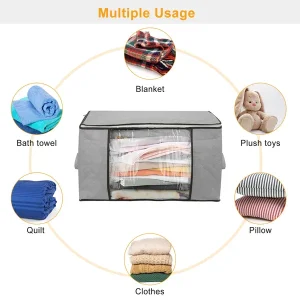
Ships from our US warehouse · 399 g · free US shipping over $49.
One bag per season beats ten small ones
A single large-capacity storage bag holds a whole winter wardrobe and keeps it together, which is the point: next autumn you pull one bag, not a scavenger hunt. Look for a bag with a clear window so you can confirm the contents without opening it, and a dual zipper so it opens flat rather than gaping in the middle. Ninety litres is a sensible size for one adult’s cold-weather clothing; a couple with coats needs two.
Store it where you can see it
A bag shoved to the back of a loft is a bag you will forget. Put seasonal storage somewhere you pass — the top of a closet, under a bed, on a high shelf you can reach with one hand. The label should face out. If you have to move three things to read it, you will not, and the whole system collapses at the next change of season.
The rule that makes it work
Nothing goes into the bag unless you wore it this season. This one rule does more than any product. If a jumper stayed on the rail for six months untouched, it will stay untouched for the next six too, and storing it just delays a decision you have already made. Be honest at the swap: the item you skipped is the item to donate, and the bag ends the season lighter than it started.
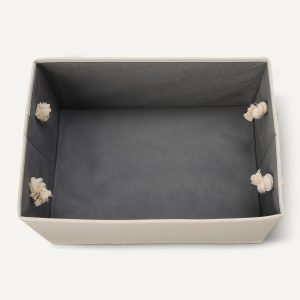
Ships from our US warehouse · 500 g · free US shipping over $49.
Protect against damp and pests
Fabric storage is vulnerable to two things: moisture and insects. Keep bags off a bare concrete floor, where condensation forms, and avoid sealing anything that is not bone dry. A cedar block or a sachet of dried lavender in the bag discourages moths without the smell of a chemical treatment, and it is safe around everything from wool to down. Check the bags once mid-season if they live somewhere cold and damp.
Rotate, do not expand
The temptation each season is to buy another bag. Resist it. If the winter bag is full before you have finished packing, the answer is to remove something, not to add capacity. Two well-packed bags that close easily beat four that are stuffed and splitting — and a bag that will not zip is a bag whose contents you will not be able to check. Hold the limit and the system stays stable year after year.
If the real bottleneck is the rail itself, our guide to organizing a closet with no shelf space covers adding levels. For bins rather than bags, see what to look for in a storage bin.
Frequently asked questions
- Should clothes be folded or hung in storage? Fold knits and anything that stretches; hanging distorts shoulders over months. Hang structured coats in a breathable cover instead.
- Can I vacuum-seal clothes? Yes for bulky items like duvets and coats, but not for anything delicate — compression creases can be permanent in wool and down.
- How do I stop moths? Store clean, dry clothing, keep bags off damp floors, and add cedar or lavender. Check once mid-season.
- Where should seasonal bags live? Somewhere you can see the label — the top of a closet or under a bed beats a loft you never open.
- How many bags do I need? One large bag per adult for cold-weather clothing; add a second for coats.