

 Wall-Mounted Metal Rack Multifunctional Key Holder, Practical Decor Highlight
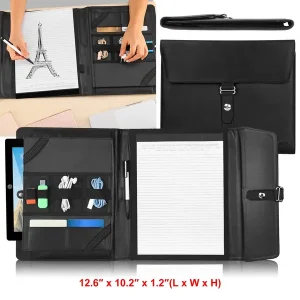 Padfolio Portfolio Folder Business Document Organizer PU Leather Padfolio Holder Case
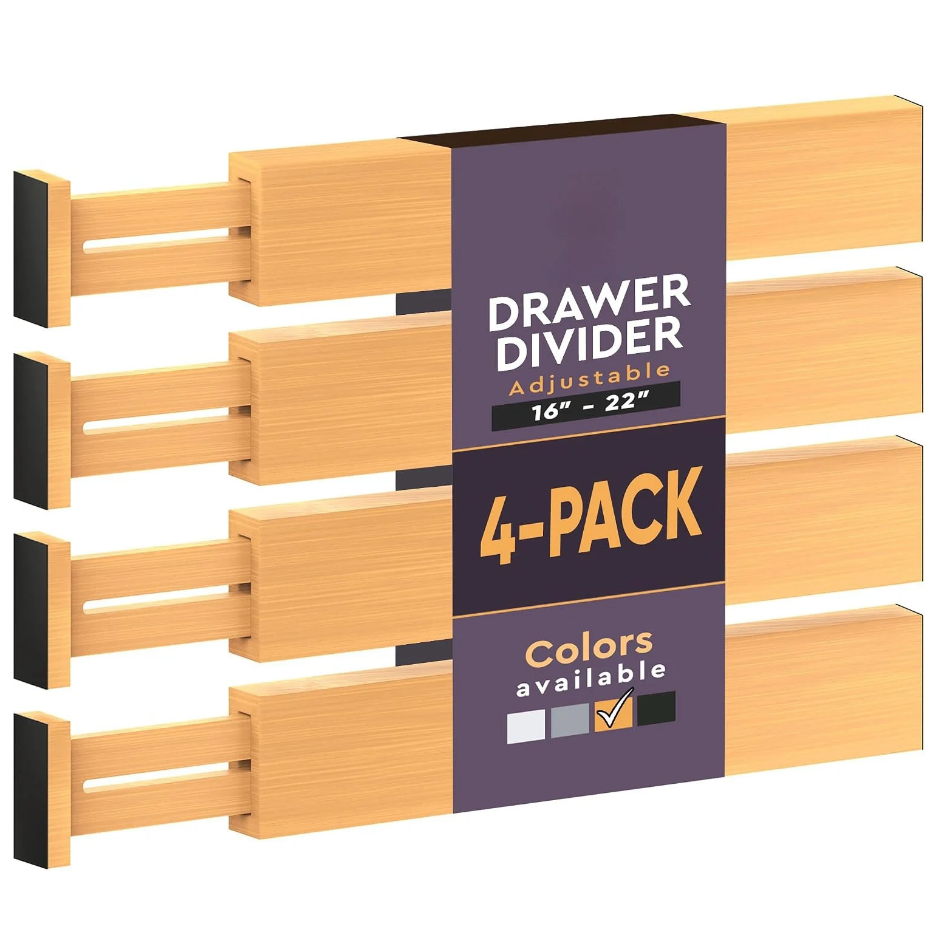
Drawer dividers are the cheapest upgrade in a kitchen or a dresser, and the one most often bought wrong. The problem is almost never the divider — it is the fit. A tray that is 2 cm too narrow slides every time you open the drawer; one that is 2 cm too wide will not sit flat. The good news is that measuring takes two minutes and removes the guesswork entirely.
- Measure the inside of the drawer, not the cabinet front.
- Expandable trays fit more drawers because drawer widths vary.
- Leave 5 mm of clearance so the tray does not jam.
- Group by how often you reach for something, not by size.
Measure the drawer, not the cabinet
The number that matters is the internal width, measured across the inside of the drawer box at the top, not the cabinet opening. Drawer boxes are often narrower than the front panel by a centimetre or more on each side, and that gap is exactly what makes a fixed tray rattle. Measure width, depth and internal height. Height matters more than people expect: a tall divider in a shallow drawer stops the drawer closing, and a knife block that is 1 cm too tall will not let the cutlery drawer shut.
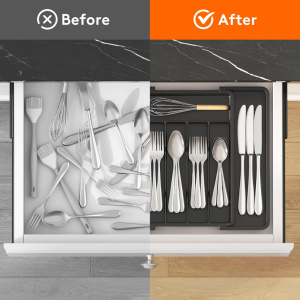
Ships from our US warehouse · 340 g · free US shipping over $49.
Expandable beats fixed in most kitchens
Drawer widths are not standard, and they are not even consistent within one kitchen. An expandable tray adjusts across a range — usually from around 30 cm to 50 cm — which means it fits the drawer you actually have rather than the drawer the manufacturer imagined. For a single-drawer problem this is the safer buy, and it is why expandable organizers outsell fixed ones for cutlery. Fixed trays still make sense when you have measured precisely and want the most compartments per centimetre.
Leave clearance, or it will jam
A divider that fits too tightly is worse than one that is slightly loose. Wood and plastic expand and contract with humidity, and a tray wedged into a drawer will bind within a season. Leave about 5 mm of total clearance — 2 to 3 mm on each side — so the tray sits flat and lifts out easily. If you are between two sizes, choose the smaller and add a small non-slip mat underneath rather than forcing the larger one.
Match the divider to the job
A cutlery tray wants shallow, uniform slots for forks, knives and spoons. A utensil drawer wants deeper, wider sections for bulky tools. A dresser drawer wants either a grid for folded items or a set of dividers you can reposition. Buying one tray to do all three is the mistake; two cheap trays sized to their drawers beat one expensive compromise. Look at what actually lives in the drawer before you count compartments.
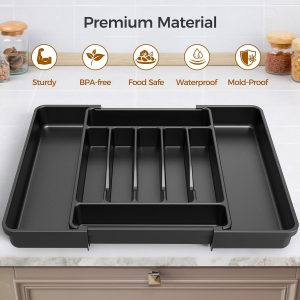
Ships from our US warehouse · 810 g · free US shipping over $49.
Why dividers drift and how to stop it
Even a correctly sized tray drifts if the drawer is deep and the tray is shallow, because there is nothing to hold it in place. A thin non-slip liner solves most of it, and it also stops cutlery sliding forward when the drawer is opened quickly. For deep drawers, choose a tray that reaches close to the full depth, or add a second smaller insert behind it. If a tray still slides, the clearance is too large — go down a size rather than shimming it.
When a drawer is the wrong home
Some things should not live in a drawer at all. Heavy appliances, sharp knives stored loose, and anything used daily in large quantities are better on a counter or a rail. A divider is a tool for separating small, similar items — if the drawer holds six unrelated things, no tray will fix it, and the honest answer is that some of them belong somewhere else. Moving one category out often makes the remaining drawer instantly workable.
Dividers pair naturally with closet storage that adds levels, and if you are fitting out a whole kitchen, measuring before you buy will save you a return.
Frequently asked questions
- How do I measure a drawer for a divider? Measure the internal width, depth and height of the drawer box, then subtract about 5 mm of clearance.
- Are expandable dividers as good as fixed ones? For a single drawer, usually yes — they fit more drawers and cost about the same. Fixed trays win only when you need maximum compartments in a measured space.
- What is the best material for a cutlery tray? Bamboo and hard plastic both last well; bamboo looks better in a wooden drawer, plastic is easier to wash.
- Should I line the drawer first? A thin non-slip liner stops the tray sliding and protects the drawer base — worth doing.
- Can I use kitchen dividers in a dresser? Yes, but choose a deeper grid style for folded clothes rather than a shallow cutlery tray.


