Most desk and cable storage fails for the same reason: it was bought for how it looks rather than for what it has to hold. Choosing the room deserves a measurement before you spend anything.
- Give each person a container, not a shared surface.
- Halve any advertised weight rating — real walls are not ideal surfaces.
- Sort by what happens next: act, keep, discard.
- Reusable hook-and-loop straps, never single-use ties.
What decides whether desk storage works
Desk and cable storage lives or dies on three numbers: the depth of the bundle it has to contain, the clearance under the desk, and the load it has to carry. Get those three right and almost any product will work. Get one wrong and no amount of clever design will save it — a box that will not close over a power brick is a box that ends up open on the floor.
The order to check them in is depth, then clearance, then load. Depth is the one that is hardest to guess, because a bundle of cables is always thicker than it looks. Clearance is the one people forget, and load is the one that only shows up a year later when a shelf has bowed.
Ships from our US warehouse · 500 g · free US shipping over $49.
Buy for the devices you have now
It is tempting to buy storage for the setup you plan to build. In practice a desk accumulates devices one at a time, and storage bought for a future configuration is usually the wrong size by the time it arrives. Buy for what is on the desk today, with a little slack, and add as the desk changes.
The exception is anything that is expensive to replace. A cable tray, a monitor arm and a good power strip are worth buying once, at the size you will eventually need, because they are fixed to the furniture rather than to the device. Anything that sits on the surface can be sized to today.
Measure the desk and the reach, not the room
A desk’s usable size is not its width — it is the width minus whatever the screen and the cable tray take. A 120 cm desk with a 60 cm monitor and a 20 cm tray has about 40 cm of clear working surface, which is where the keyboard and the notebook have to fit. Measure the clear surface, and plan from that number.
Reach matters as much as size. Anything you use more than once an hour should be reachable without standing; anything above the desk should be reachable without a stool if it is used weekly. A shelf 40 cm above a desk is convenient; the same shelf 60 cm above it is decorative.
What to look for in a document box
A document box needs three things: a lid, a label surface, and a size that matches the paper inside. A lidded box keeps dust and light off the contents; a label surface means you can find a year without opening it; and the size matters because a box that is too big lets the paper slump and curl at the edges.
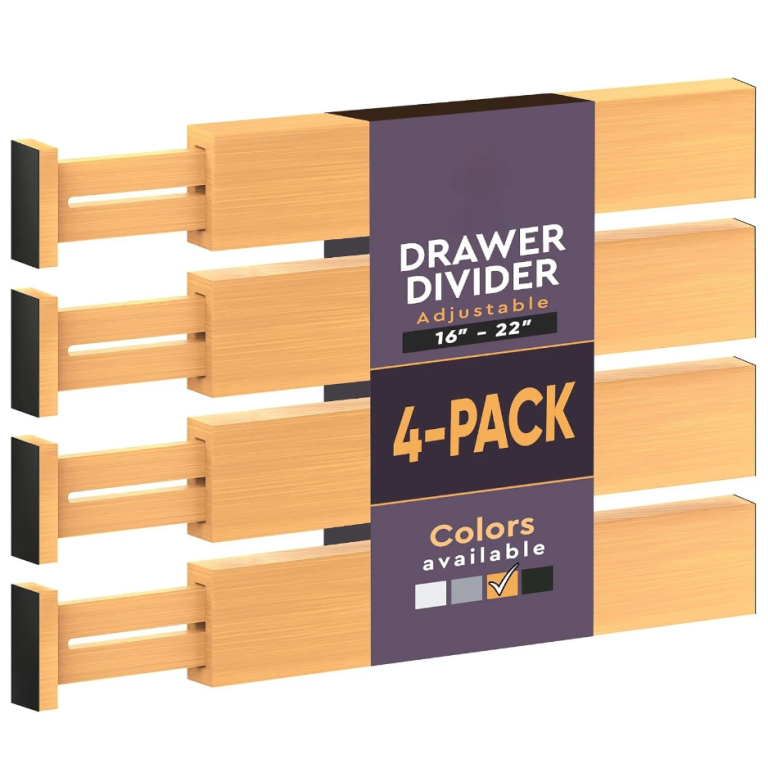
For the room, dividers are what make the box work. Use one divider per year or per category, and write on the top edge rather than the face — a divider labelled on the top reads when the box is open and full, which is the only time it matters. Rigid dividers are worth the extra over card ones, which bend and disappear.
Ships from our US warehouse · 626 g · free US shipping over $49.
How to keep it working after the first week
The system fails when something new arrives and has no place to go. Give every new device a default: a spare-charger box, a spare-cable pouch, a tray for paperwork. When there is a named home for the new thing, it goes there; when there is not, it goes on the desk and the desk starts to drift again.
The other habit worth building is the five-minute reset at the end of the day. Not a tidy-up — a reset. Put the day’s objects back in their zones, clear the surface, and leave the cables where they belong. Five minutes daily is less work than an hour monthly, and it is the only maintenance this kind of setup needs.
When to stop buying and start removing
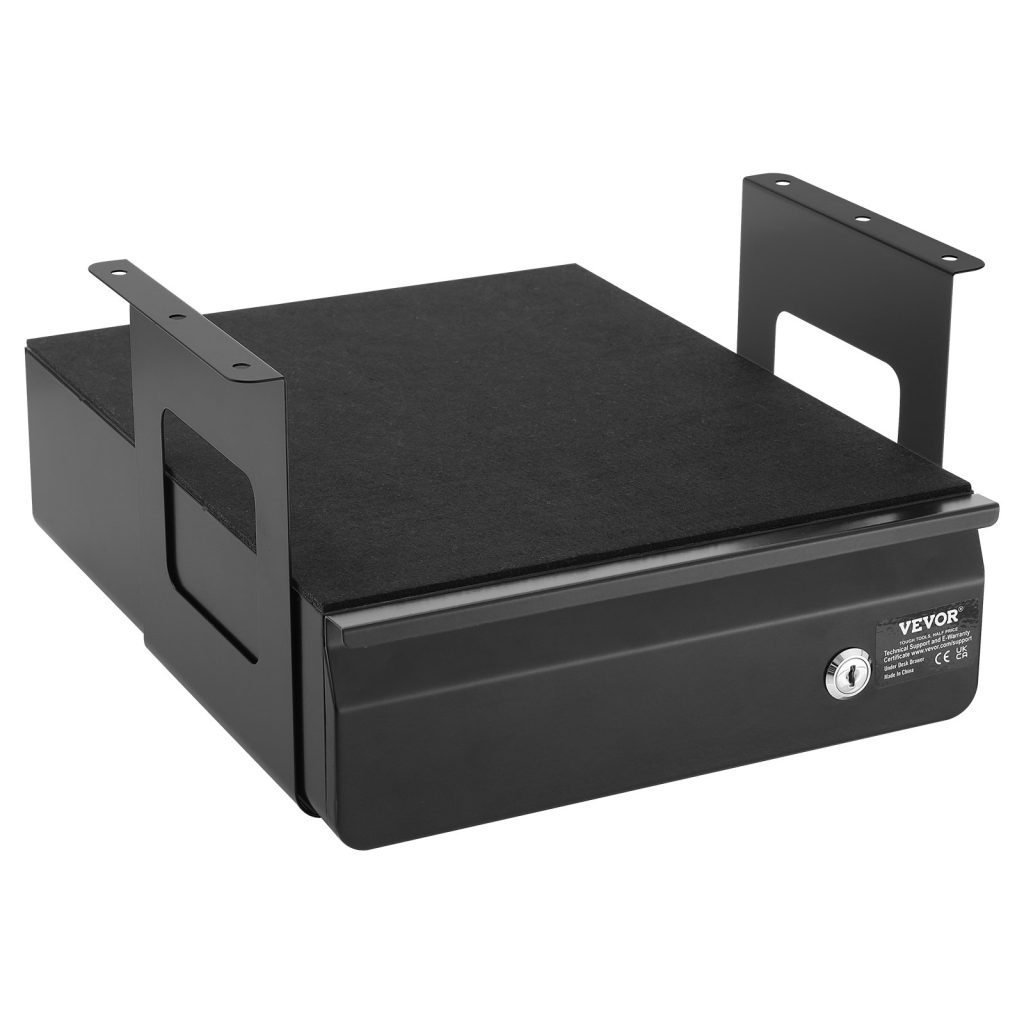
Every desk drawer eventually holds cables for devices you no longer own. Before you buy another organizer, empty the drawer and test every cable: does a device in this house use it, and do you know which one? Anything that fails both questions goes. Most people recover a third of a cable drawer this way.
The same applies to paper. A document box that is full is usually full of things that were kept because keeping was easier than deciding. Go through it once a year, remove what has expired, and the box will stay a comfortable size rather than growing into a second box you did not plan for.
See also How to organise a desk for two people sharing a room, and How to choose storage for a child's room for the wider picture.
Frequently asked questions
- What should I measure first? The bundle. Add up the cable diameters, then add the power brick, then add 2 cm of slack. That is your internal size.
- How much clearance does a cable tray need? Enough for the tray plus the cables plus your knees. On a 72 cm desk, an 8 cm tray leaves 64 cm of legroom.
- Should I buy for a future setup? Only for things fixed to the desk — tray, arm, power strip. Everything else should fit what is on the desk now.
- How much slack should I leave? About 20 per cent of the space. Enough for one more device, not enough to encourage hoarding.
- How wide should a desk be? At least 120 cm for a monitor and a keyboard, 140 cm if you also want paper beside you. Measure the clear surface after the screen, not before.