A closet rarely fails because it is too small. It fails because two or three categories are competing for the same level and nothing has a boundary. Getting hats right is a good place to start, because it forces the one decision that matters: what gets a home, and what does not.
- The back of the door adds capacity without touching the floor.
- One box of matching hangers is the cheapest wardrobe upgrade.
- Give every category one container, then hold the limit.
- When you must move two things to reach one, stop buying.
Why folded things come unfolded
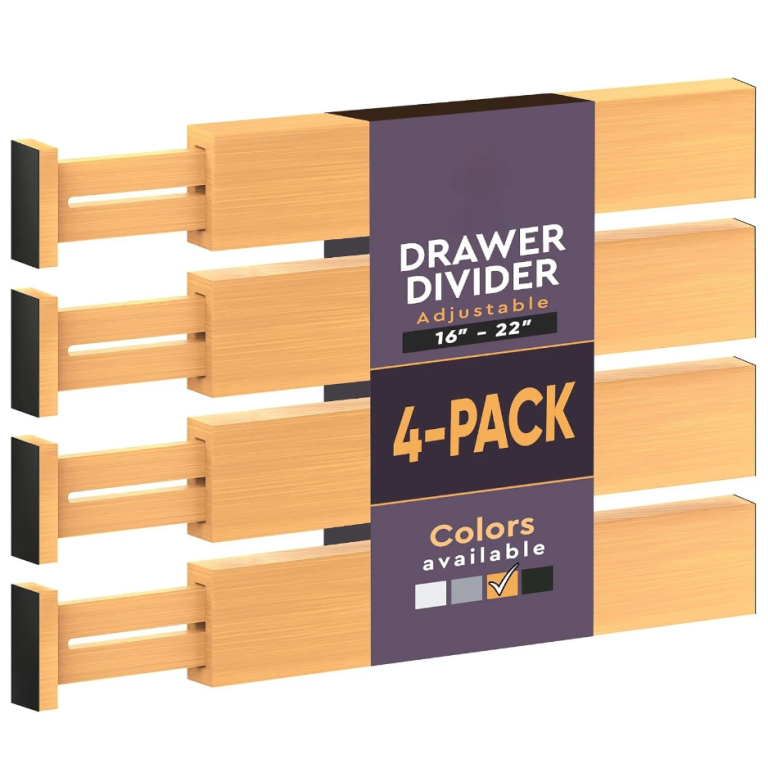
A drawer rarely fails because it is full. It fails because the folded stack has nothing to lean on. Every time the drawer opens, the front item tips forward, and by the third day the stack has collapsed into a heap. The fix is not a better fold or a bigger drawer — it is a boundary. Give each stack a wall to lean against and the fold you already use will hold for weeks rather than days.
Folding is only half the job. A stack of folded clothes is stable while it is compressed and unstable the moment there is slack, which is why the fold that looks perfect on day one is a heap by Friday. The variable you control is depth: a stack should either fill the drawer front to back, so the drawer wall holds it, or sit in a bin that does the same job.
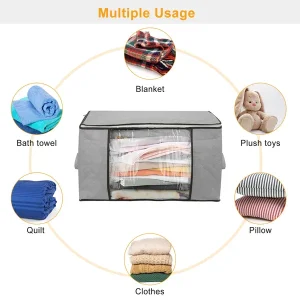
Ships from our US warehouse · 399 g · free US shipping over $49.
Change the axis before you change the shelf
Before adding a shelf for hats, try turning them. Shoes stored toe-out on a rack use about a third less depth than the same shoes side by side, and boots stood upright use less still. Racks also ventilate, which matters more than most people expect: a closed box of worn shoes is where smells come from, and an open rack is the cheapest fix.
If a rack is not an option, go heel-to-toe in a shallow drawer. A 20 cm deep drawer takes a full pair of most adult shoes laid heel to toe, which is half the depth of a standard shelf. The trade is that you have to open the drawer, so keep daily pairs out and drawer the rest.
How much depth and weight to allow
For hats, plan 30 cm of depth for shoes stored toe-out, 35 cm for heel-to-toe, and 40 cm for tall boots. Weight is the other half: a full over-the-door rack can reach 10 to 15 kg, and a single coat on a hook can be 2 kg. An adhesive hook rated for 5 kg is fine for a towel and wrong for a wet winter coat.
The honest rule for any hanging storage is to halve the advertised rating. Manufacturers test on smooth, sealed, ideal surfaces; a painted plasterboard wall in a steamy bathroom is not that. Halving gives you a margin that survives a humid week and a moment of carelessness.
What to look for in hanging hardware
For hats, the load rating and the fixing are the two things that decide whether it lasts. A wall-mounted rail wants at least two fixings into a stud or a proper wall plug; an adhesive mount is for light loads on smooth, sealed surfaces only. If the wall is plasterboard and the load is a coat, use a fixing, not glue.
Hangers are worth a moment’s thought too. Flocked slim hangers grip woven fabric, hold their shape, and roughly halve the rail space a wooden hanger takes. Wire hangers should be retired — they distort shoulders and slide off a rail. A single box of matching hangers is one of the cheapest upgrades a wardrobe can get.
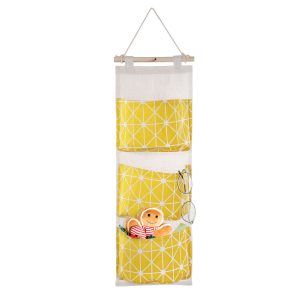
Ships from our US warehouse · 95 g · free US shipping over $49.
How to keep it working after the first week
Most organized spaces drift back within a fortnight, and the cause is almost always the same: one category outgrew its container. When that happens, the instinct is to add a bin. The better move is to remove the overflow. Set a container limit and hold it — if the sock bin is full, a new pair of socks means an old pair leaves. That keeps the system stable without a weekly tidy-up.
The second cause is a container with no home. Anything that has to be moved before it can be used will stop being used. If a bin has to come off a shelf and be opened to reach the thing you need daily, the bin is in the wrong place — swap it for the daily item and put the bin where you can reach it.
When to stop buying and start removing
Storage is not a substitute for editing. Before you buy a fourth bin, take everything out and put back only what you used in the last year. Most people find a full third of a closet is dead weight: clothes that no longer fit, cables for devices they no longer own, and half-used sets. Removing that first means the storage you already have works better, and the bin you were about to buy is often unnecessary.
A useful test for anything you are unsure about is the two-move rule. If you would not move it to a new home, you do not need it in this one. That single question settles more decisions than any amount of clever storage, and it is free.
See also How to organise a closet when the door will not close, and How to choose a key rack or mail holder for the wider picture.
Frequently asked questions
- How do I stop folded clothes falling over? Fill the drawer front to back, or put the stack in a bin with a stiff side. A stack that leaves a gap in front of it will always collapse forward.
- Is vertical folding better than stacking? Vertical filing works best in a shallow drawer. In a deep drawer a stack with a boundary holds just as well and is faster to put away.
- How many pairs fit on an over-the-door rack? A 24-pocket rack holds 12 pairs, but only if the pockets are deep enough for a size 10. Check pocket depth, not pocket count.
- Do shoe racks hold boots? Most do not. Boots want either a shelf with 35 to 40 cm of height, or a rack with adjustable spacing.
- How much weight can an adhesive hook hold? Treat 5 kg as 2.5 kg on paint or plasterboard. On tile or glass you can get closer to the rating, but only after cleaning the surface properly.