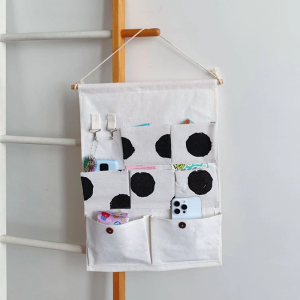
 Seven Pockets Storage Hanging Bag-Polka Dots 5026
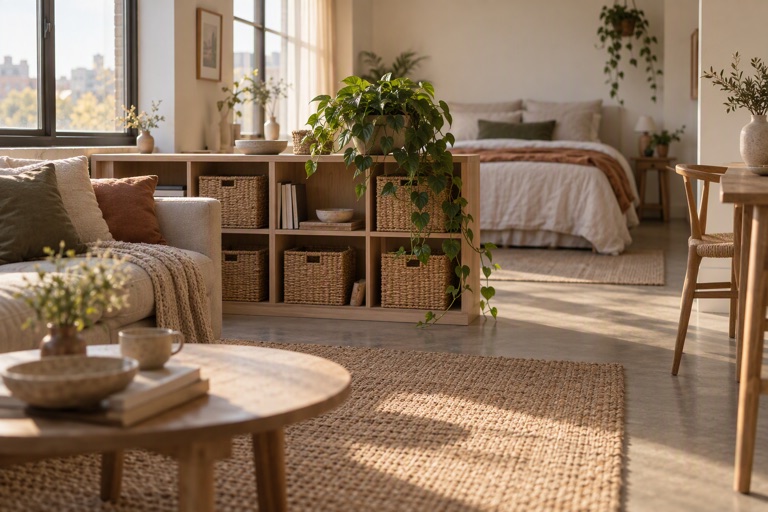
In a small home the scarce thing is not space — it is clear surface. Getting hats right is one of the first things worth doing, and it costs nothing to try.
- Two baskets, not one — dirty, and clean-but-unput-away.
- Three jobs by the door: keys, post, daily shoes.
- Measure the gaps, not the room.
- Nestable or foldable containers cost nothing in the off-season.
Why laundry storage is always underestimated
Laundry is three jobs in one place: dirty, clean and in-between. Most homes provide storage for one of them, so the other two end up on the floor or on a chair. The minimum that works is a basket for dirty, a surface for folding, and somewhere for clean clothes to wait — and the third is the one almost everyone forgets.
In a small home the trick is to make the basket do two jobs. A stacking hamper doubles as the folding surface when it is capped, and a sorter with two compartments lets you separate without a second basket. Anything that holds clothes and can also be stood on or folded over is worth its floor space.

Ships from our US warehouse · 57 g · free US shipping over $49.
Go up the wall in three bands
Divide the wall into three bands and give each one a job. The reach band, roughly 90 to 150 cm from the floor, is for daily items — hooks, a rail, the shelf you actually touch. The stretch band above it, 150 to 190 cm, is for weekly and monthly items. The top band is for the twice-a-year box, and nothing else.
Working in bands stops the two mistakes small rooms make: filling the reach band with decorative objects, and putting daily items so high they need a stool. If you find yourself fetching from the top band weekly, the bands are wrong — swap the contents of the stretch and top bands and the room will work.
The numbers a small kitchen runs on
A few standard numbers solve most small-kitchen problems. A wall cabinet is 30 to 35 cm deep, a base unit 60 cm, and a worktop 60 cm. The gap between a worktop and the wall cabinet above it is 50 to 60 cm — that gap is the most contested space in the room, and it is where a rail or a shallow shelf earns its place.
For hats, the number to measure is the counter depth you actually have left. If appliances occupy 40 of 60 cm, you have 20 cm to work with, which is a chopping board and nothing else. Knowing that number tells you whether the answer is a smaller appliance, a wall rail, or moving something out of the room entirely.
What to look for in laundry storage
A laundry basket in a small home has to earn its footprint, so look for one that stacks, folds, or doubles as a surface. A stacking hamper with a lid gives you a folding surface and a basket in the same square metre, and a foldable one disappears entirely when the wash is done. Both beat a rigid basket that only ever holds dirty clothes.
Ventilation is the specification people skip. A sealed basket of damp washing smells within a day, so look for a breathable fabric or a vented lid. A sorter with two compartments is worth it for a family, but only if you actually separate — a three-way sorter in a home that washes everything together is just a bigger basket.
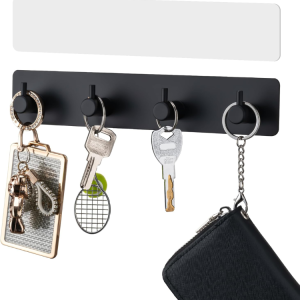
Ships from our US warehouse · 170 g · free US shipping over $49.
How to keep a small space working
Small spaces drift faster than large ones, because there is no slack to absorb anything new. The rule that keeps them stable is one in, one out, applied at the door: if something new comes into the room, something leaves it in the same week. That single habit does more than any storage purchase.
The second habit is a daily reset of one surface. In a small home, one clear surface — the counter, the desk, or the table — makes the whole room feel under control, and it is the surface you should protect above all others. Two minutes a day on that one surface is the whole maintenance routine.
When to stop buying and start removing
In a small home, storage has a hard ceiling, and it arrives sooner than people expect. Past it, every new container makes the room feel smaller even though it holds more. The signal is when you have to move one thing to reach another. At that point the only work that helps is subtraction.
Go room by room once a year and ask the two-move question of everything: would you move this to a new home? Anything you would not move is something you are storing rather than using, and in a small space that is an expensive habit. Removing a third of the contents of one room usually does more than any purchase you could make for it.
Related reading: How to organise a small laundry area. It also pairs well with How to store laundry supplies in a closet.
Frequently asked questions
- How many laundry baskets do I need? Two: one for dirty, one for clean-but-unput-away. A single basket guarantees a pile on the floor.
- Do laundry sorters help? Only if you actually sort. A two-compartment sorter works for most households; three compartments rarely get used properly.
- How high should wall storage go? Daily items at 90 to 150 cm, weekly at 150 to 190 cm, and anything above that only twice a year.
- What if the wall is not mine to drill? Use adhesive hooks on tile or glass, and over-the-door storage everywhere else. Both cost no fixings and no floor.
- How deep should a kitchen shelf be? 20 to 25 cm above a worktop. Deeper and you cannot see the back; shallower and a plate will not stand on it.