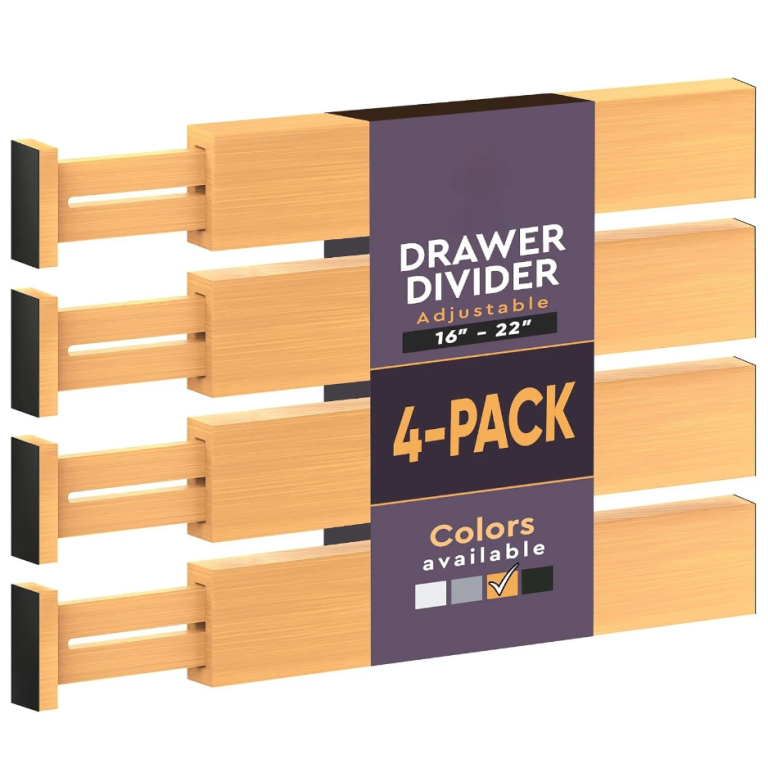
 2Pcs Clothes Storage Bag 90L Large Capacity Foldable Closet Organizer W/ Thick Fabric Clear Window Dual-Zipper
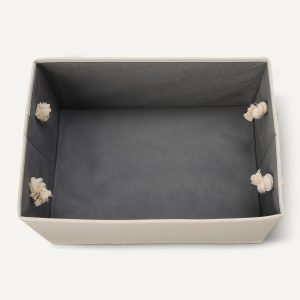 Foldable Storage Bins With Rope Handles, Large Linen Closet Organizers, 3-Pack, Collapsible Storage Boxes For Home & Bedroom
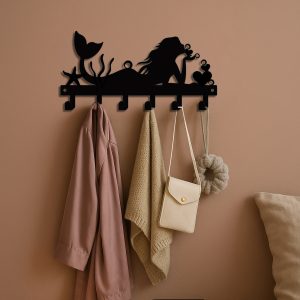 Wall-mounted Single Hanger With Built-in Key Holder,The Decorative Hooks
 Pack Of 3 Large Capacity Storage Bins, Foldable Closet Organizer Boxes With Handles For Clothes, Sheets, Toys, Books & Shelves
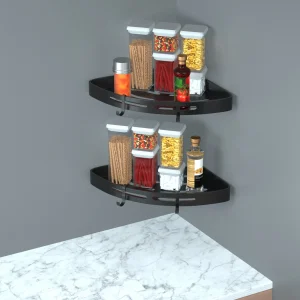 Bath Corner Shower Shelves Adhesive Caddy, Wall Mounted, No Drilling Racks Shower Organizer Basket, Aluminum Storage for Bathroom Kitchen
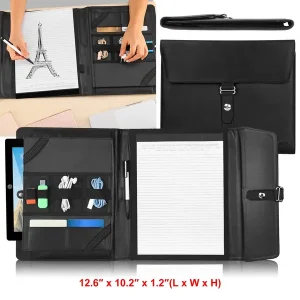 Padfolio Portfolio Folder Business Document Organizer PU Leather Padfolio Holder Case
 Neutral Back-of-Toilet Storage Basket, Decorative Bathroom Organizer For Toilet Tank, Towels, Toiletries And Essentials
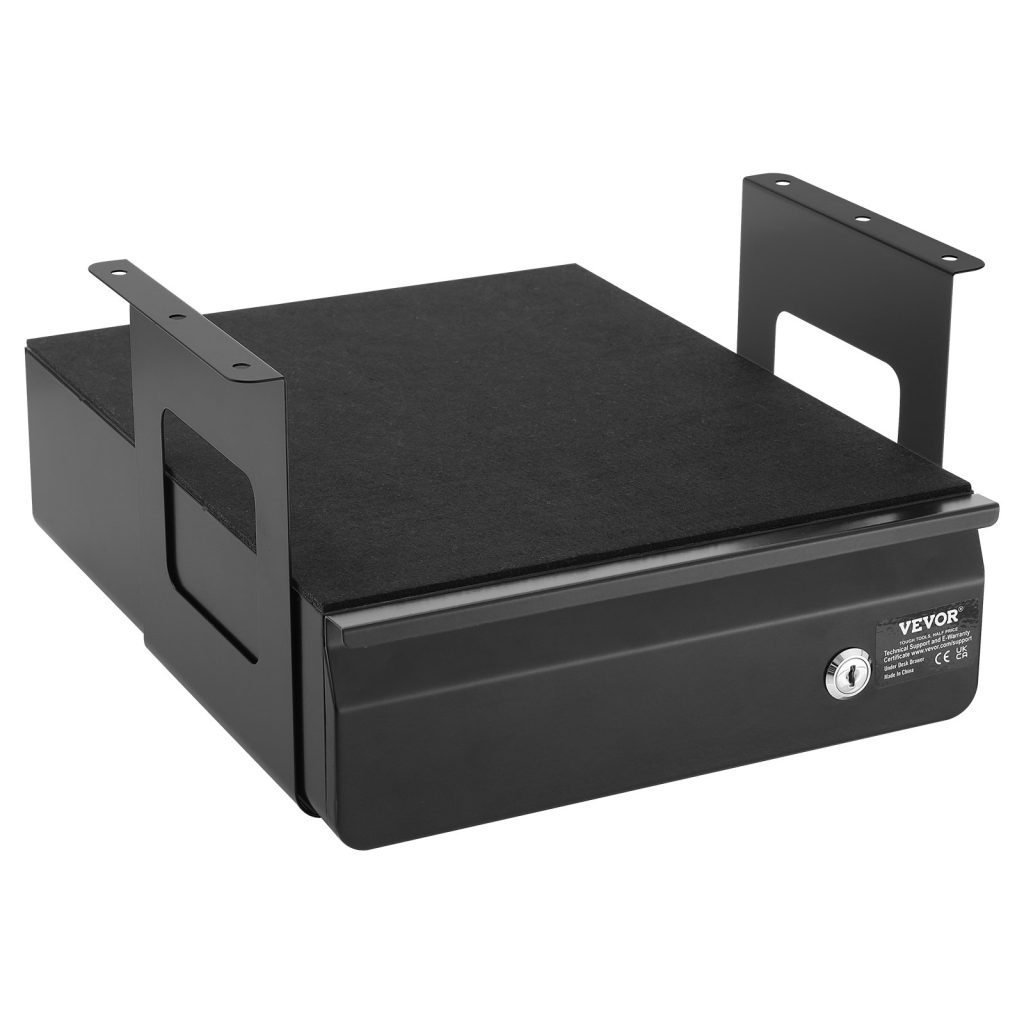
Most desk and cable storage fails for the same reason: it was bought for how it looks rather than for what it has to hold. Choosing the entryway deserves a measurement before you spend anything.
- Sort by what happens next: act, keep, discard.
- A shallow drawer beside the keyboard beats three pots on the desk.
- Halve any advertised weight rating — real walls are not ideal surfaces.
- Measure the bundle, not the single cable, before buying a box.
What decides whether desk storage works
Desk and cable storage lives or dies on three numbers: the depth of the bundle it has to contain, the clearance under the desk, and the load it has to carry. Get those three right and almost any product will work. Get one wrong and no amount of clever design will save it — a box that will not close over a power brick is a box that ends up open on the floor.
The order to check them in is depth, then clearance, then load. Depth is the one that is hardest to guess, because a bundle of cables is always thicker than it looks. Clearance is the one people forget, and load is the one that only shows up a year later when a shelf has bowed.
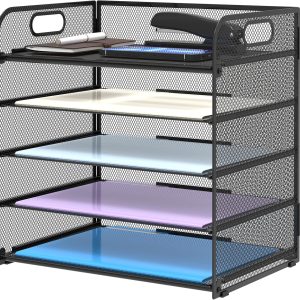
Ships from our US warehouse · 500 g · free US shipping over $49.
Buy for the devices you have now
It is tempting to buy storage for the setup you plan to build. In practice a desk accumulates devices one at a time, and storage bought for a future configuration is usually the wrong size by the time it arrives. Buy for what is on the desk today, with a little slack, and add as the desk changes.
The exception is anything that is expensive to replace. A cable tray, a monitor arm and a good power strip are worth buying once, at the size you will eventually need, because they are fixed to the furniture rather than to the device. Anything that sits on the surface can be sized to today.
Measure the bundle, not the cable
When you are sizing anything that has to contain cables, measure the bundle and not the individual cable. Six cables at 4 mm each is a 24 mm bundle before you add connectors, and a power brick is 40 mm on its own. A box that is 3 cm too short will not close over the brick, which is the most common reason a cable box ends up open on the floor.
Then measure the clearance under the desk. A cable tray needs the desk’s underside to be flat, and it needs enough room for the tray plus the cables plus your knees. A tray that sits 8 cm below a 72 cm desk leaves 64 cm of legroom, which is tight for a tall person. Check the desk height before you check the tray.
What to look for in a network enclosure
Ventilation is the specification that matters, and it is the one most enclosures get wrong. Look for slots or a mesh front, not a solid lid, and avoid metal entirely if the router is inside — a metal enclosure acts as a shield. Wood, fabric and perforated board are all fine; a sealed metal box is not.
Size it for the cables as well as the devices. A router plus a modem plus a power brick plus the incoming line needs roughly 30 x 20 x 15 cm of internal space, and the cables need to leave through a gap rather than being pinched at the back. A pinch point on a power lead is a fire risk, not just an untidy one.
Ships from our US warehouse · 400 g · free US shipping over $49.
How to keep it working after the first week
The system fails when something new arrives and has no place to go. Give every new device a default: a spare-charger box, a spare-cable pouch, a tray for paperwork. When there is a named home for the new thing, it goes there; when there is not, it goes on the desk and the desk starts to drift again.
The other habit worth building is the five-minute reset at the end of the day. Not a tidy-up — a reset. Put the day’s objects back in their zones, clear the surface, and leave the cables where they belong. Five minutes daily is less work than an hour monthly, and it is the only maintenance this kind of setup needs.
When the answer is not more storage
In a small or shared space, storage has a ceiling. Once you have to move one thing to reach another, adding more has stopped paying. The useful work at that point is deciding what does not need to be here — a second monitor that is used twice a year, a printer that could live in a cupboard, a box of cables for a hobby you have paused.
It is also worth questioning the desk itself. A desk that is the wrong size for the room will always feel cluttered, no matter how it is organised. Sometimes the honest answer is a smaller desk and a shelf above it, which frees floor and gives the eye somewhere calm to rest.
For a related problem, see How to choose a wall organizer for a kitchen. It also pairs well with How to organise an entryway for a family of four.
Frequently asked questions
- What should I measure first? The bundle. Add up the cable diameters, then add the power brick, then add 2 cm of slack. That is your internal size.
- How much clearance does a cable tray need? Enough for the tray plus the cables plus your knees. On a 72 cm desk, an 8 cm tray leaves 64 cm of legroom.
- Should I buy for a future setup? Only for things fixed to the desk — tray, arm, power strip. Everything else should fit what is on the desk now.
- How much slack should I leave? About 20 per cent of the space. Enough for one more device, not enough to encourage hoarding.
- How big should a cable box be? Big enough to hold the power brick plus the bundle with 2 cm to spare. Measure the brick first — it is always bigger than expected.