In a small home the scarce thing is not space — it is clear surface. Getting the fridge right is one of the first things worth doing, and it costs nothing to try.
- Free-standing and over-the-door storage beats a deposit risk.
- Nestable or foldable containers cost nothing in the off-season.
- Measure the gaps, not the room.
- Under the bed and above the wardrobe are usually 400 litres.
Why a small room feels smaller than it is
A small room reads as smaller than it is when every surface is doing a job. Storage, seating and work all competing for the same two metres of wall is what makes a space feel tight — not the number of square metres, but the number of things asking for attention at once.
That is why clearing one surface changes a room so much. The eye needs somewhere to rest, and a single empty stretch of wall or counter gives it one. Before you move anything or buy anything, clear the surface you see first and live with it for a week.

Ships from our US warehouse · 139 g · free US shipping over $49.
Use the zones the kitchen already has
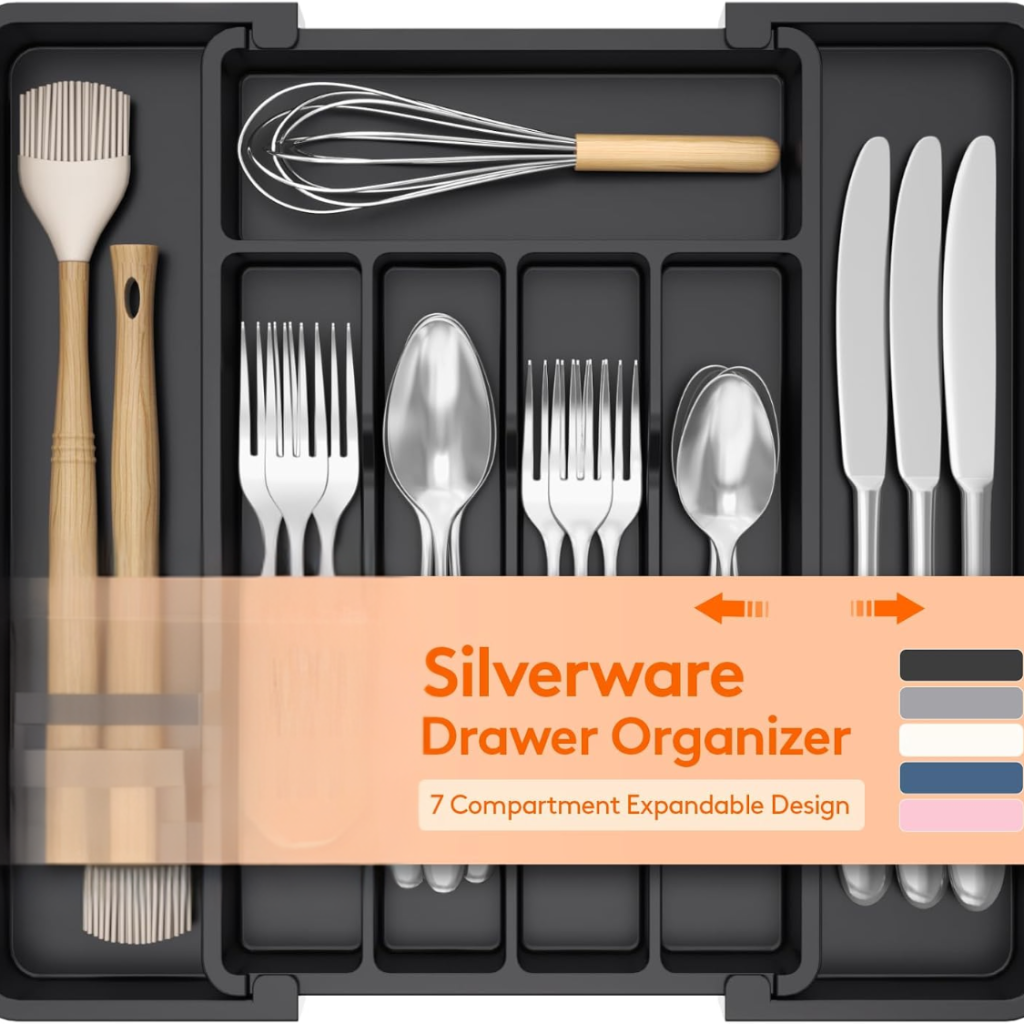
A kitchen has natural zones — store, prepare, cook, clean — and storage works best when it sits in the zone it serves. Plates and pans near the cooker, food near the preparation surface, cleaning supplies under the sink, bins near where you chop. Getting the zones right removes more clutter than any organizer, because things stop being carried across the room and left where they land.
In a small kitchen the zones overlap, so the priority order is: cooking tools first, then food, then cleaning, then everything else. If a zone has to give up space, it should give it up from the bottom of that list. That is the rule that keeps the counter usable when the cupboards are full.
Measure the gaps, not the room
In a small room the useful measurements are not the room’s dimensions but the gaps inside it: the 15 cm beside the fridge, the 20 cm under the bed, the 30 cm above the door, the space behind a door that swings. Those gaps are where storage fits without costing floor, and they are almost always wasted because nobody measures them.
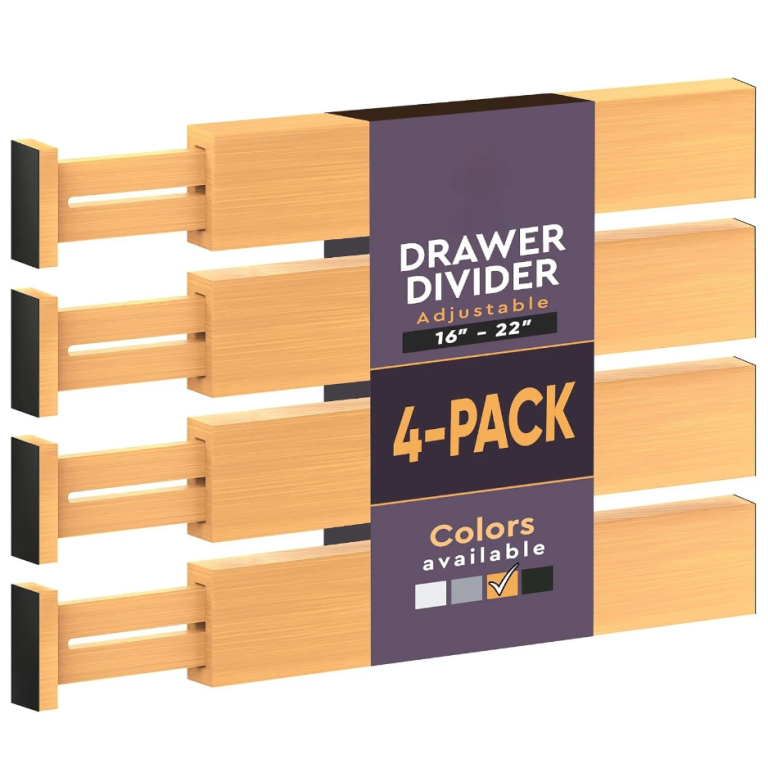
Write the gaps down before you shop. A list of five real measurements — 15 x 60, 20 x 90, 30 x 80, and so on — turns a vague search into a specific one, and it is what stops the classic small-home mistake of buying a unit that almost fits. If a gap is awkward, look for expandable or modular storage rather than a fixed unit.
What to look for in a basket or bin
In a small space, the container is doing two jobs: holding things and looking acceptable in the open. That means soft, matte materials — felt, woven fabric, coated paper rope — read better than shiny plastic, and a uniform set of three reads better than five mismatched ones. Visual calm is worth as much as capacity in a room you are always in.
Buy nestable or foldable where you can. A basket that collapses when not in use costs nothing in the off-season, which matters in a home where every centimetre is accounted for. And check the lift: a basket that is too heavy to pull off a high shelf will stay on the floor, however good it looks.
Ships from our US warehouse · 494 g · free US shipping over $49.
How to keep a small space working
Small spaces drift faster than large ones, because there is no slack to absorb anything new. The rule that keeps them stable is one in, one out, applied at the door: if something new comes into the room, something leaves it in the same week. That single habit does more than any storage purchase.
The second habit is a daily reset of one surface. In a small home, one clear surface — the counter, the desk, or the table — makes the whole room feel under control, and it is the surface you should protect above all others. Two minutes a day on that one surface is the whole maintenance routine.
When to stop buying and start removing
In a small home, storage has a hard ceiling, and it arrives sooner than people expect. Past it, every new container makes the room feel smaller even though it holds more. The signal is when you have to move one thing to reach another. At that point the only work that helps is subtraction.
Go room by room once a year and ask the two-move question of everything: would you move this to a new home? Anything you would not move is something you are storing rather than using, and in a small space that is an expensive habit. Removing a third of the contents of one room usually does more than any purchase you could make for it.
Related reading: How to organise an entryway for a family of four. It also pairs well with How to store USB sticks and memory cards.
Frequently asked questions
- Why does my room feel cramped? Usually because every surface is busy. One clear surface does more for how a room feels than any storage you could add.
- What should I clear first? The surface you see when you walk in. That is the one the eye reads as the state of the whole room.
- How do I organise a small kitchen? By zone: store, prepare, cook, clean. Put things in the zone they are used in, and let the least-used zone shrink first.
- What goes under the sink? Cleaning supplies and the bin, if it fits. Never food, and never anything that would be damaged by a leak.
- How do I find usable space in a small room? Measure the gaps, not the room. Beside appliances, under furniture and above doors are the usual three.