Cable and desk problems share a cause: nothing has a fixed place, so everything stays out. Getting the desk right is a good place to start, because it is the change that makes the rest of the desk easier to keep clear.
- Keep the working surface empty and give every object a zone.
- Halve any advertised weight rating — real walls are not ideal surfaces.
- Design for the ten seconds before a call starts.
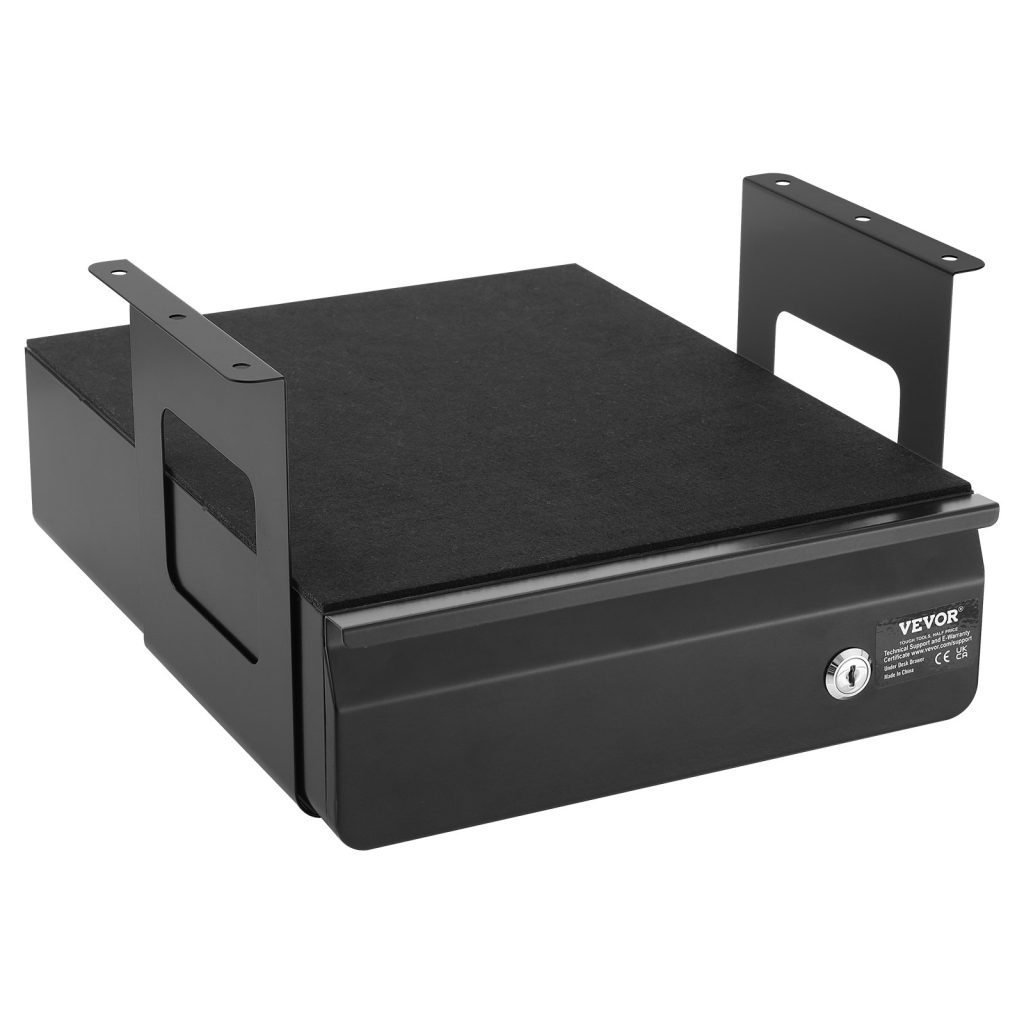
- A shallow drawer beside the keyboard beats three pots on the desk.
Why a desk becomes a dumping ground
A desk turns into a dumping ground because it is the only horizontal surface in the room that is at hand height. Everything that arrives with nowhere to go lands there: post, a charger, a mug, a cable. The desk is not the problem — the missing thing is a landing place next to it that is not the desk itself.
The second cause is that the desk has no closed storage. Anything that cannot be put away in one motion stays out, and things that stay out attract other things. One drawer, one tray, or one lidded box within arm’s reach removes most of the accumulation, because it gives every arriving object somewhere to be that is not the working surface.

Ships from our US warehouse · 500 g · free US shipping over $49.
Give the desk three zones and no more
A working desk needs three zones: the working surface, which stays empty; the reach zone within arm’s length, which holds what you use daily; and the store zone, which holds everything else. Most desks fail because the reach zone is doing the store zone’s job, so the surface is crowded with things that are only occasionally needed.
Everything daily goes in the reach zone and nowhere else: pen, notebook, charger, headphones. Everything weekly goes in a drawer. Everything monthly goes on a shelf behind you or in a box. If an object has no zone, it will live on the surface — so the rule that matters is that every object has one, and only one, place to go back to.
Measure the desk and the reach, not the room
A desk’s usable size is not its width — it is the width minus whatever the screen and the cable tray take. A 120 cm desk with a 60 cm monitor and a 20 cm tray has about 40 cm of clear working surface, which is where the keyboard and the notebook have to fit. Measure the clear surface, and plan from that number.
Reach matters as much as size. Anything you use more than once an hour should be reachable without standing; anything above the desk should be reachable without a stool if it is used weekly. A shelf 40 cm above a desk is convenient; the same shelf 60 cm above it is decorative.
What to look for in a document box
A document box needs three things: a lid, a label surface, and a size that matches the paper inside. A lidded box keeps dust and light off the contents; a label surface means you can find a year without opening it; and the size matters because a box that is too big lets the paper slump and curl at the edges.
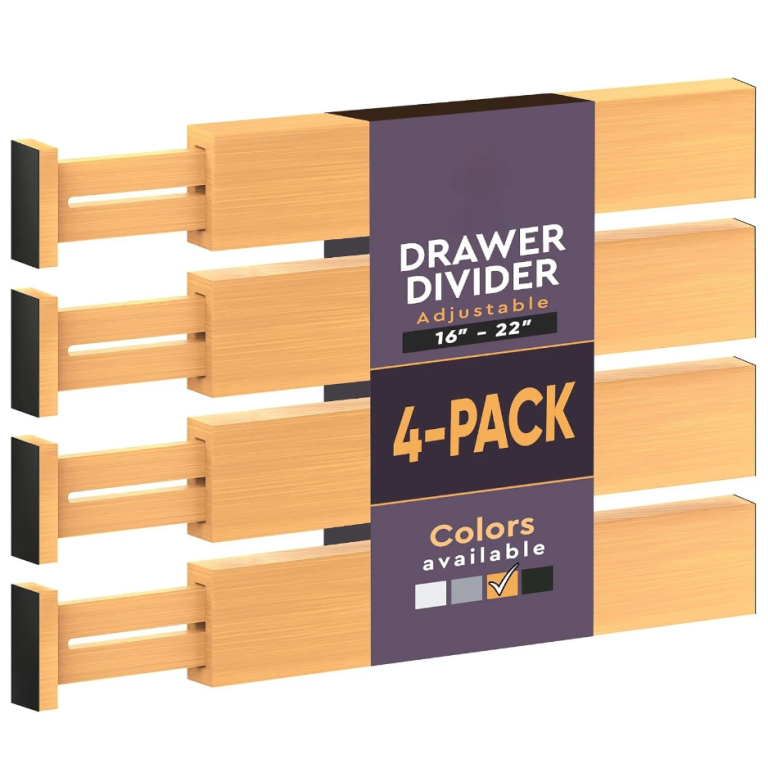
For the desk, dividers are what make the box work. Use one divider per year or per category, and write on the top edge rather than the face — a divider labelled on the top reads when the box is open and full, which is the only time it matters. Rigid dividers are worth the extra over card ones, which bend and disappear.
Ships from our US warehouse · 400 g · free US shipping over $49.
How to keep it working after the first week
The system fails when something new arrives and has no place to go. Give every new device a default: a spare-charger box, a spare-cable pouch, a tray for paperwork. When there is a named home for the new thing, it goes there; when there is not, it goes on the desk and the desk starts to drift again.
The other habit worth building is the five-minute reset at the end of the day. Not a tidy-up — a reset. Put the day’s objects back in their zones, clear the surface, and leave the cables where they belong. Five minutes daily is less work than an hour monthly, and it is the only maintenance this kind of setup needs.
When to stop buying and start removing
Every desk drawer eventually holds cables for devices you no longer own. Before you buy another organizer, empty the drawer and test every cable: does a device in this house use it, and do you know which one? Anything that fails both questions goes. Most people recover a third of a cable drawer this way.
The same applies to paper. A document box that is full is usually full of things that were kept because keeping was easier than deciding. Go through it once a year, remove what has expired, and the box will stay a comfortable size rather than growing into a second box you did not plan for.
Related reading: How to keep a desk tidy when you work from it all day. It also pairs well with How to choose a desk cable tray for a thick desk.
Frequently asked questions
- Why does my desk get messy so fast? Because it is the nearest flat surface. Add a landing tray beside it and a closed drawer in it, and the pile stops forming.
- Should I clear my desk every night? Two minutes is enough. Put the day's objects in their places and leave the surface empty — the habit matters more than the thoroughness.
- How do I keep a desk clear? Keep the surface empty and give every object a zone within reach, in a drawer, or on a shelf. No zone means no home.
- What belongs on the desk itself? Only what you use daily. Everything else is costing you working space for the sake of being nearby.
- How wide should a desk be? At least 120 cm for a monitor and a keyboard, 140 cm if you also want paper beside you. Measure the clear surface after the screen, not before.