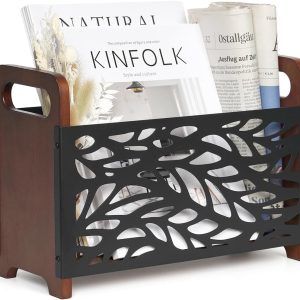
 Wood Magazine Holder, Rustic Magazine Rack And File Organizer For Home, Office, Living Room And Bedroom
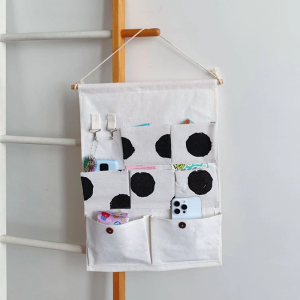 Seven Pockets Storage Hanging Bag-Polka Dots 5026
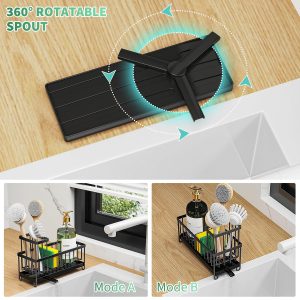 Kitchen Sponge Holder Drain Rack Sink Organizer For Scrubber Storage
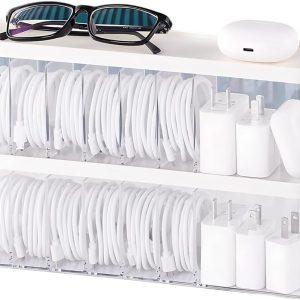 Charger Cable Cord Storage Organizer Box, Easy Cable Management Case For USB Wires, Charging Cords And Home Office Use
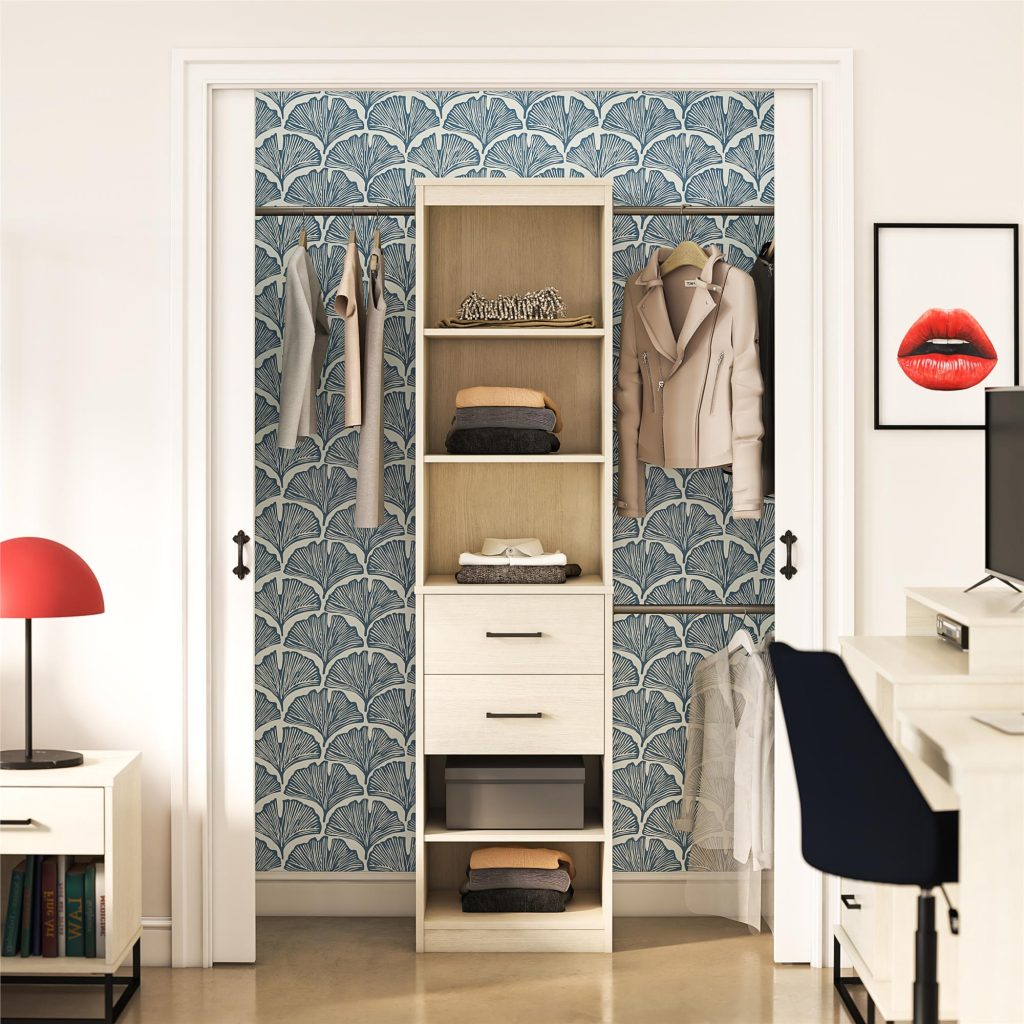
Small rooms do not fail for lack of storage. They fail because the storage is in the wrong place, doing one job when it could do two. Getting the wardrobe right is a good place to start, because it is usually solved by moving something rather than by buying something.
- Under the bed and above the wardrobe are usually 400 litres.
- Leave a 2 cm gap behind storage on an outside wall.
- Measure the gaps, not the room.
- Nestable or foldable containers cost nothing in the off-season.
Why a small room feels smaller than it is
A small room reads as smaller than it is when every surface is doing a job. Storage, seating and work all competing for the same two metres of wall is what makes a space feel tight — not the number of square metres, but the number of things asking for attention at once.
That is why clearing one surface changes a room so much. The eye needs somewhere to rest, and a single empty stretch of wall or counter gives it one. Before you move anything or buy anything, clear the surface you see first and live with it for a week.
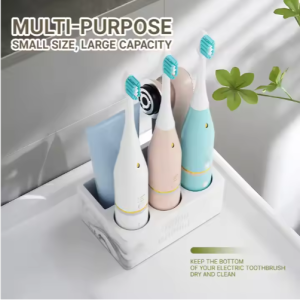
Ships from our US warehouse · 472 g · free US shipping over $49.
Use the two spaces nobody counts
Two spaces in every small home go unused because they are not part of any room: under the bed and on top of the wardrobe. Together they are usually 400 litres or more. Under-bed space is ideal for the seasonal and the bulky — suitcases, spare bedding, off-season clothes — because it is dark, dry and out of the way.
The rule for both is the same: nothing goes there that you need without planning. Keep the contents in labelled, lidded boxes that slide, and keep a list. Under-bed storage fails when it becomes a place things are put to be forgotten, so treat it as an archive rather than a cupboard — everything in it should be something you would be happy to find in six months.
The numbers a small kitchen runs on
A few standard numbers solve most small-kitchen problems. A wall cabinet is 30 to 35 cm deep, a base unit 60 cm, and a worktop 60 cm. The gap between a worktop and the wall cabinet above it is 50 to 60 cm — that gap is the most contested space in the room, and it is where a rail or a shallow shelf earns its place.
For the wardrobe, the number to measure is the counter depth you actually have left. If appliances occupy 40 of 60 cm, you have 20 cm to work with, which is a chopping board and nothing else. Knowing that number tells you whether the answer is a smaller appliance, a wall rail, or moving something out of the room entirely.
What to look for in wall hardware
For a small space, three products do most of the work: a rail with adjustable hooks, a shallow shelf on brackets, and adhesive hooks for the surfaces that will not take a fixing. Buy the rail and hooks as a set so the spacing matches — mixing brands usually means the hooks do not sit where you want them.
Check two specifications before buying anything that holds weight. The load rating, which you should halve for real-world use, and the fixing type, which decides whether it will work on your wall at all. A hook that needs a stud and a hook that takes a plasterboard plug are different products, and the packaging rarely makes it obvious.
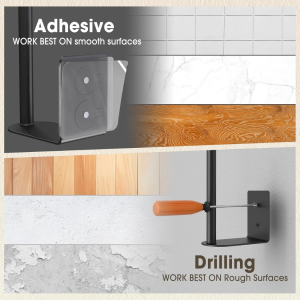
Ships from our US warehouse · 100 g · free US shipping over $49.
How to keep a small space working
Small spaces drift faster than large ones, because there is no slack to absorb anything new. The rule that keeps them stable is one in, one out, applied at the door: if something new comes into the room, something leaves it in the same week. That single habit does more than any storage purchase.
The second habit is a daily reset of one surface. In a small home, one clear surface — the counter, the desk, or the table — makes the whole room feel under control, and it is the surface you should protect above all others. Two minutes a day on that one surface is the whole maintenance routine.
When to stop buying and start removing
In a small home, storage has a hard ceiling, and it arrives sooner than people expect. Past it, every new container makes the room feel smaller even though it holds more. The signal is when you have to move one thing to reach another. At that point the only work that helps is subtraction.
Go room by room once a year and ask the two-move question of everything: would you move this to a new home? Anything you would not move is something you are storing rather than using, and in a small space that is an expensive habit. Removing a third of the contents of one room usually does more than any purchase you could make for it.
For a related problem, see How to organise a small bedroom with no wardrobe. It also pairs well with How to organise a closet for a capsule wardrobe.
Frequently asked questions
- Why does my room feel cramped? Usually because every surface is busy. One clear surface does more for how a room feels than any storage you could add.
- What should I clear first? The surface you see when you walk in. That is the one the eye reads as the state of the whole room.
- What should go under a bed? Suitcases, spare bedding and off-season clothes — anything you plan to fetch rather than reach for. Keep it in lidded boxes that slide.
- Is under-bed storage bad for anything? It can be dusty and it traps moisture if the floor is cold. Do not store anything damp, and avoid natural fibres directly on a concrete floor.
- How deep should a kitchen shelf be? 20 to 25 cm above a worktop. Deeper and you cannot see the back; shallower and a plate will not stand on it.