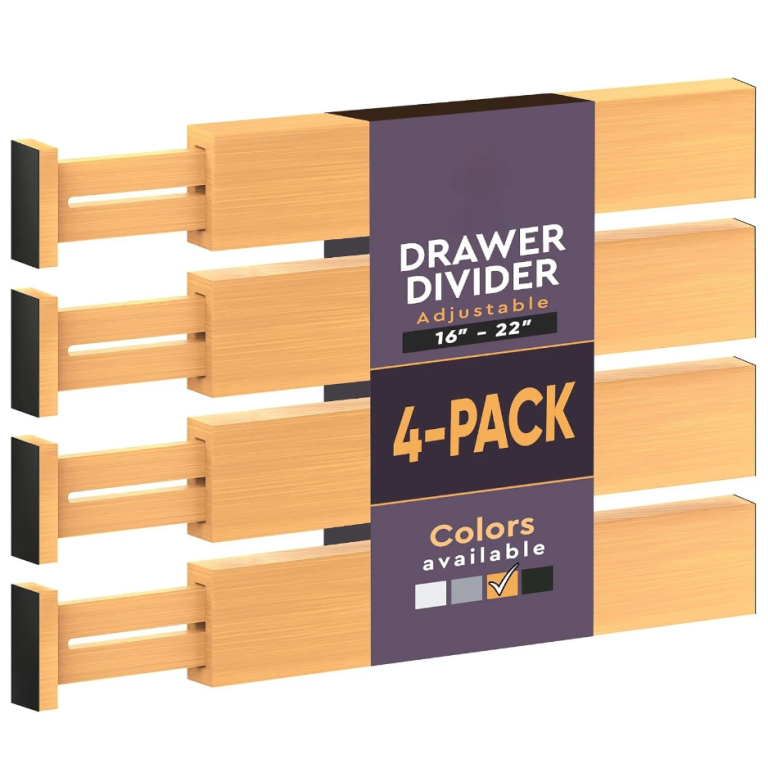
Renting removes one tool — the drill — and people assume that means no storage. It does not. Adhesive hooks, tension poles, over-the-door racks and freestanding shelving cover almost every need, and they all come down without a mark. The trick is knowing which method suits which wall, and how much weight each will honestly take.
- Adhesive for light, frequent items on smooth walls.
- Tension poles for anything between floor and ceiling.
- Over-the-door racks for the back of any door.
- Never exceed half an adhesive hook’s rating.
Adhesive: the light-duty workhorse
Adhesive hooks and caddies are the first tool for a renter. They hold coats, towels, keys, kitchen tools and bathroom bottles, and they remove cleanly when you follow the release tab. They work best on smooth, painted walls, tile and glass, and they need 24 hours to cure before loading. Keep them for light items — a hook rated at 13 lb should carry no more than about 6 lb in practice.
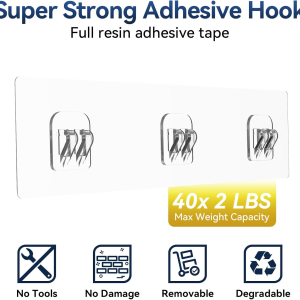
Ships from our US warehouse · 590 g · free US shipping over $49.
Tension poles: strength without holes
A tension pole wedges between floor and ceiling and can hold real weight, which makes it the answer for anything adhesive cannot manage. Use it in a corner for shelves, or as a wardrobe rail in a room with no closet. The pole needs two solid surfaces and a ceiling you can press against; it will not work under a suspended ceiling or on a slope. Check the load rating, and re-tension it after the first week as it settles.
Over-the-door: capacity in a blank space
Every door is a storage opportunity. An over-the-door organizer adds twenty pockets, and a door-mounted rail or rack adds hanging space, all without touching the wall. Measure the door thickness first, and keep the load light. The inside of a closet door is the best spot because the pockets stay hidden until you need them.
Freestanding: no fixing at all
Slim freestanding shelves and rolling carts need no fixing whatsoever and can be moved from room to room. They are the most flexible option and the one most renters overlook. A narrow cart fits beside a fridge, in a gap between a washing machine and a wall, or in a bathroom corner, and it holds far more than its footprint suggests. If you are unsure where storage should go, start freestanding — you can move it until it is right.
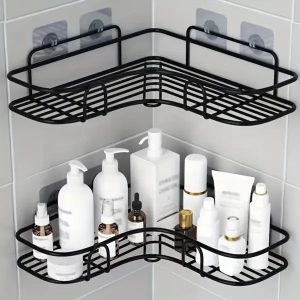
Ships from our US warehouse · 227 g · free US shipping over $49.
What not to do
Do not use heavy-duty adhesive on a textured wall or a wall you have just painted — the paint may peel before the adhesive fails. Do not drill into a rental without permission, even for a small fixing. Do not hang a heavy mirror or a loaded shelf on adhesive, however strong the rating claims to be. And do not stack adhesive and drilled fixings on the same item, because they pull against each other. Match the method to the load and the surface.
Removing it all at the end of a tenancy
The reason no-drill storage suits renters is not just installation, it is removal. Adhesive hooks pull off cleanly by the release tab, tension poles simply unclip, and freestanding units just move. Plan the removal for a day when you have time, warm stubborn adhesive gently with a hairdryer, and you will hand the property back without a single filler mark. That is worth more than the extra capacity alone.
Adhesive hooks have their own rules — see what they hold and how to make them stay. For a wet room specifically, small-bathroom storage covers the options.
Frequently asked questions
- What is the strongest no-drill option? A tension pole between floor and ceiling holds more than adhesive and needs no holes. Adhesive is for light items only.
- Will adhesive damage the wall? Removed by the release tab, no. Rushed removal can lift paint, so take your time.
- Can I put shelves up without drilling? Yes — tension poles and freestanding units both give shelving with no fixings.
- Do tension poles work on any ceiling? No. They need two solid surfaces and a flat, firm ceiling, not a suspended or sloped one.
- What about a bathroom? Adhesive fails on surfaces soaked daily. Use a freestanding caddy or a tension option instead.