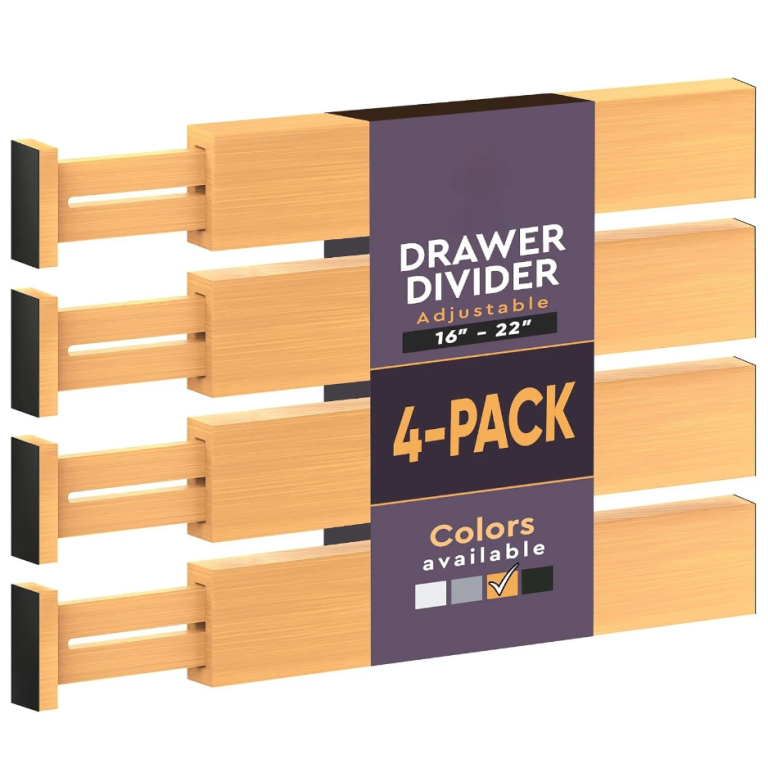
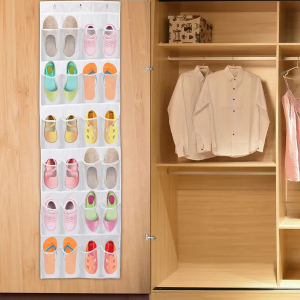
 1Pc Over The Door Shoes Rack 24-Pocket Crystal Clear Organizer
 Cozy Home Wall Hooks Set Warm Metal Coat Hangers With Cute Heart Design Perfect
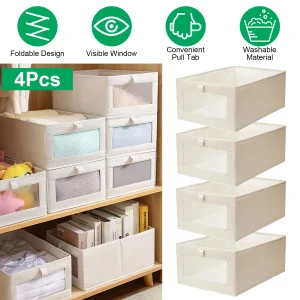 4Pcs Foldable Closet Storage Bins with Clear Window, Washable Linen Fabric Storage Baskets for Clothes Organization
 Decorative Toilet Paper Basket, Boho Jute And Cotton Rope Storage Bin With Tassel For Bathroom And Home
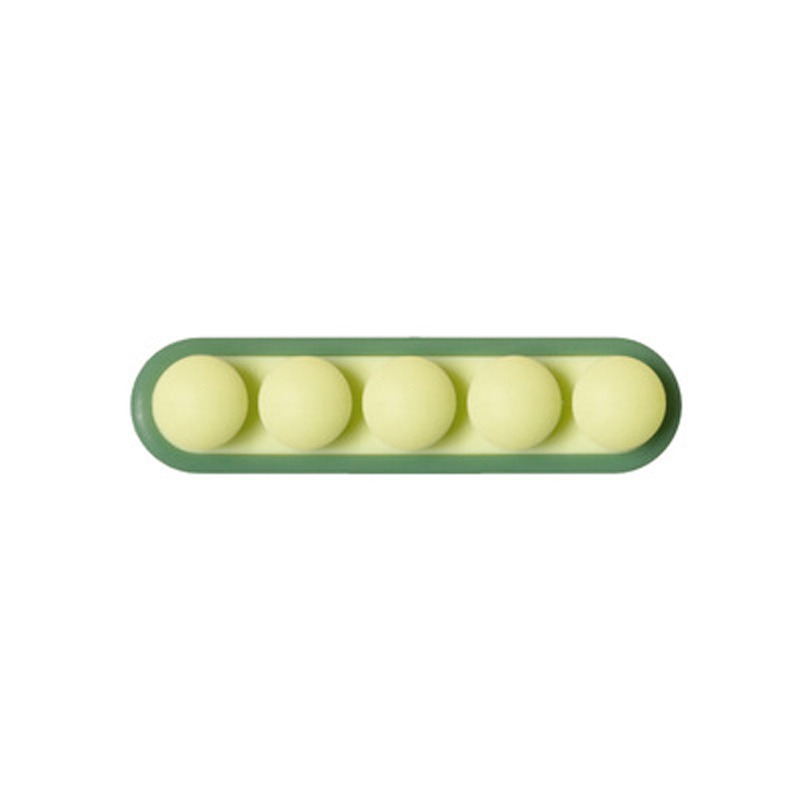
A desk does not get messy because it is small. It gets messy because the things on it have nowhere to go back to. Getting cables right is usually the first thing that helps, and it takes less time than finding the right cable does.
- Measure the bundle, not the single cable, before buying a box.
- Keep the working surface empty and give every object a zone.
- Wrap to a consistent loop and hold it — a fixed loop cannot tangle.
- Sort by what happens next: act, keep, discard.
Why cables tangle even when they are put away
Cables tangle because they are stored loose and long. A coil that is not held will relax, cross itself, and knot — and the longer the cable, the faster it happens. The fix is to fix the shape: wrap to a loop of a consistent size, hold it with a tie or a clip, and store the loop flat. A cable stored at a fixed loop size cannot tangle, however long it sits.
The second cause is mixing. When charging cables, data cables and power leads share one drawer, you cannot find the one you need without lifting the others, and lifting is what tangles them. Separate by job, not by length, and the drawer stops being a knot.

Ships from our US warehouse · 626 g · free US shipping over $49.
Give the desk three zones and no more
A working desk needs three zones: the working surface, which stays empty; the reach zone within arm’s length, which holds what you use daily; and the store zone, which holds everything else. Most desks fail because the reach zone is doing the store zone’s job, so the surface is crowded with things that are only occasionally needed.
Everything daily goes in the reach zone and nowhere else: pen, notebook, charger, headphones. Everything weekly goes in a drawer. Everything monthly goes on a shelf behind you or in a box. If an object has no zone, it will live on the surface — so the rule that matters is that every object has one, and only one, place to go back to.
Measure the desk and the reach, not the room
A desk’s usable size is not its width — it is the width minus whatever the screen and the cable tray take. A 120 cm desk with a 60 cm monitor and a 20 cm tray has about 40 cm of clear working surface, which is where the keyboard and the notebook have to fit. Measure the clear surface, and plan from that number.
Reach matters as much as size. Anything you use more than once an hour should be reachable without standing; anything above the desk should be reachable without a stool if it is used weekly. A shelf 40 cm above a desk is convenient; the same shelf 60 cm above it is decorative.
What to look for in cable management
Four things do almost all the work: a tray under the desk to hold the run, a box on it for the devices, hook-and-loop straps to hold the loops, and a clip or two to fix the cable to the back edge. Sleeves look tidy but they hide everything inside them, so use them only for a run you will never need to change.
Buy straps, not ties. A hook-and-loop strap can be opened and reused a hundred times, which matters because you will re-route these cables. A one-piece plastic tie is a single-use item that you will end up cutting, and cutting a tie next to a live cable is a bad habit to build.
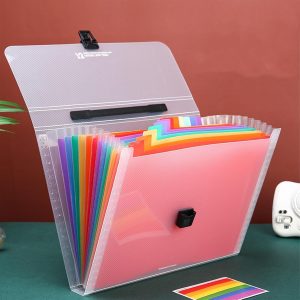
Ships from our US warehouse · 265 g · free US shipping over $49.
The maintenance nobody does
Cables and electronics collect dust, and dust plus heat is what shortens the life of a power brick. Twice a year, unplug the run, wipe the cables with a dry cloth, and vacuum the vents on anything with a fan. It takes ten minutes and it is the whole maintenance schedule for a desk.
Check the strain points while you are there. The cable right at the plug is where damage starts, and a cable that is bent sharply at the connector will fail long before the rest of it. If a cable is under tension at the plug, re-route it or add a service loop — it is a two-minute fix that saves a device.
When to stop buying and start removing
Every desk drawer eventually holds cables for devices you no longer own. Before you buy another organizer, empty the drawer and test every cable: does a device in this house use it, and do you know which one? Anything that fails both questions goes. Most people recover a third of a cable drawer this way.
The same applies to paper. A document box that is full is usually full of things that were kept because keeping was easier than deciding. Go through it once a year, remove what has expired, and the box will stay a comfortable size rather than growing into a second box you did not plan for.
See also Desk organizers that actually stay tidy, and How to organise a desk inside a bedroom for the wider picture.
Frequently asked questions
- What is the best way to store a cable? A consistent loop, held with a reusable tie, stored flat. The over-under wrap keeps the cable from twisting on itself.
- Do cable ties damage cables? A hard plastic tie pulled tight can crush the conductor. Use a hook-and-loop strap or a soft clip instead.
- How do I keep a desk clear? Keep the surface empty and give every object a zone within reach, in a drawer, or on a shelf. No zone means no home.
- What belongs on the desk itself? Only what you use daily. Everything else is costing you working space for the sake of being nearby.
- How wide should a desk be? At least 120 cm for a monitor and a keyboard, 140 cm if you also want paper beside you. Measure the clear surface after the screen, not before.