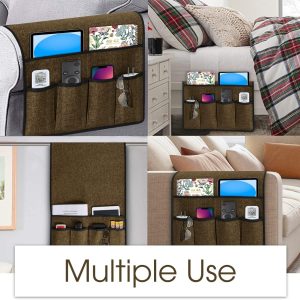
 Remote Control Holder Armchair Caddy, Chocolate Armrest Organizer For TV Remotes, Phone, Magazines And Small Items
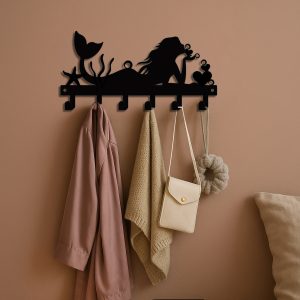 Wall-mounted Single Hanger With Built-in Key Holder,The Decorative Hooks
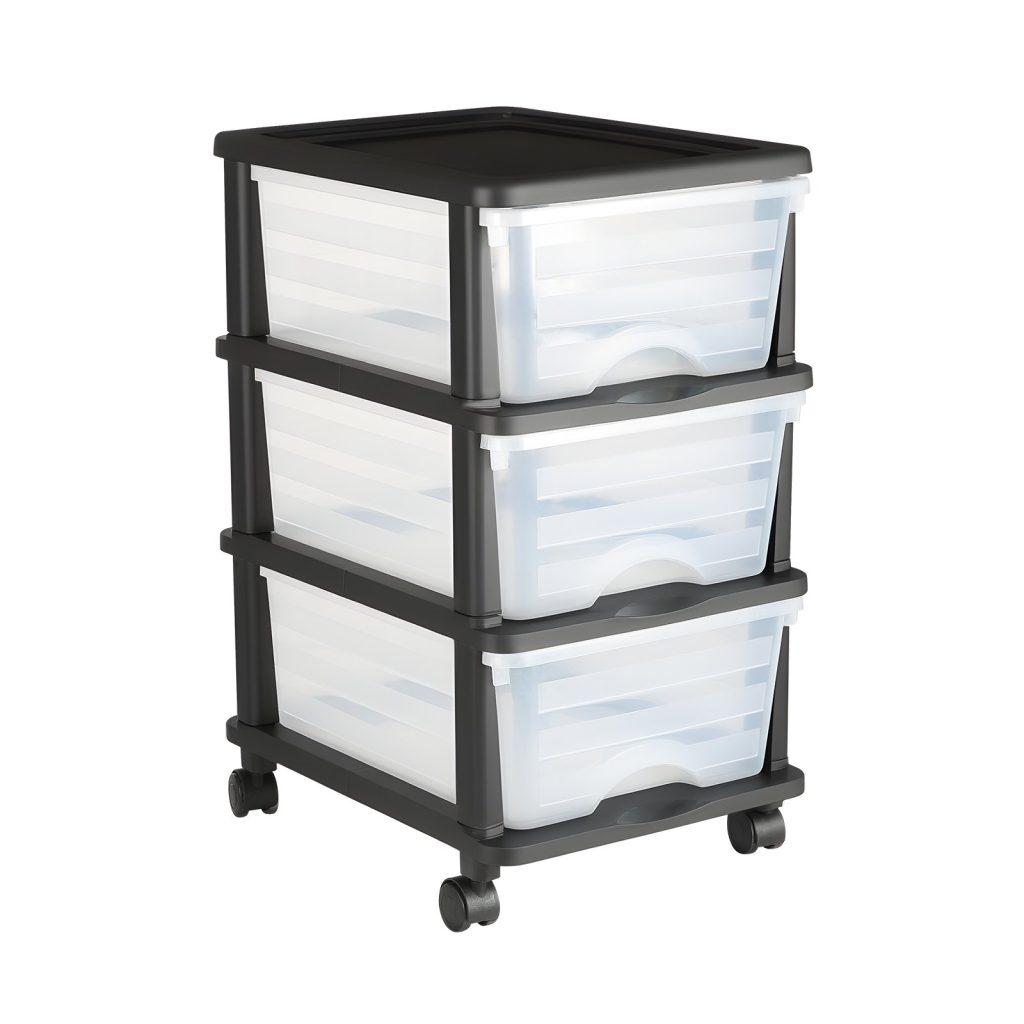
In a small home a purchase has to earn its footprint, and most do not. Choosing storage deserves measuring against the gap it will live in before you spend anything at all.
- Plan the bathroom outward from the mirror.
- Divide the wall into three bands: reach, stretch, archive.
- Keep the counter a work surface and nothing else.
- Floor is the scarcest thing you own — anything on it should do two jobs.
What decides whether a small-space purchase earns its place
In a small home a purchase has to clear three bars: it must fit a gap you have actually measured, it must do more than one job or take no floor, and it must be light enough to move when the room changes. Most products clear one of the three, which is why so much small-space storage ends up in a cupboard.
The third bar is the one people miss. A small room is rearranged often, and anything too heavy to move on your own becomes a fixed feature you have to work around. If a unit cannot be shifted by one person in a minute, it is furniture rather than storage, and it should be judged as furniture.
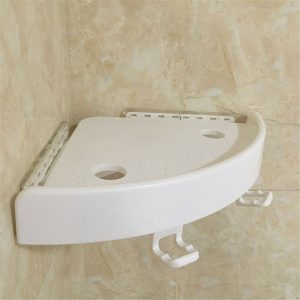
Ships from our US warehouse · 491 g · free US shipping over $49.
Buy for the gap, not for the room
Small-space shopping goes wrong when it starts from a picture rather than a measurement. The useful starting point is a list of the gaps you have — beside the fridge, under the bed, above the door, behind the door — with their real dimensions written down. Buy for one of those gaps and the purchase fits by construction.
Keep the list on your phone. The gaps in a small home are easy to forget between measuring and shopping, and the moment you are standing in a shop is exactly the moment you cannot remember whether it was 15 cm or 25 cm. A note with five measurements turns a guess into a decision.
Measure the gaps, not the room
In a small room the useful measurements are not the room’s dimensions but the gaps inside it: the 15 cm beside the fridge, the 20 cm under the bed, the 30 cm above the door, the space behind a door that swings. Those gaps are where storage fits without costing floor, and they are almost always wasted because nobody measures them.
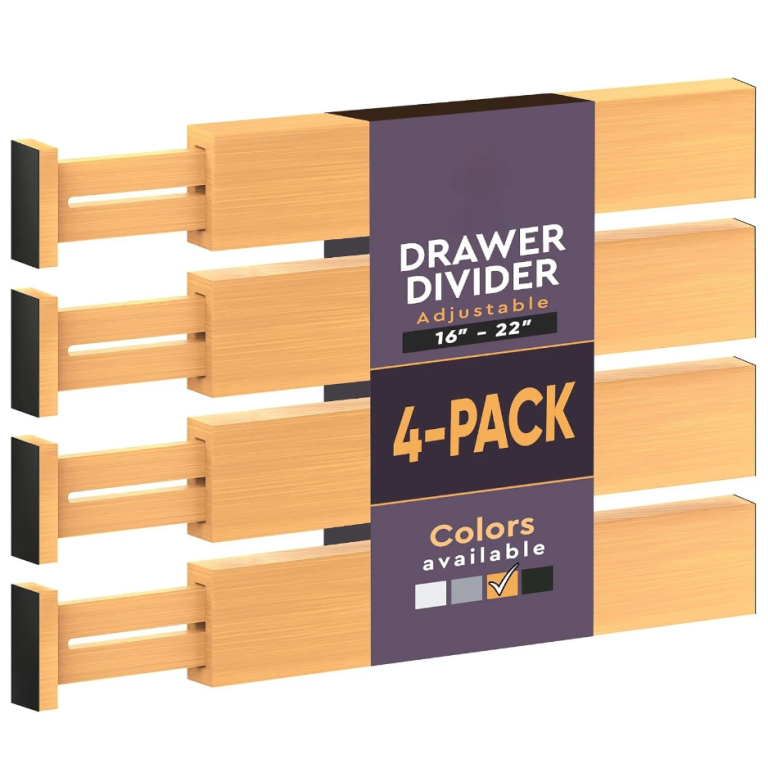
Write the gaps down before you shop. A list of five real measurements — 15 x 60, 20 x 90, 30 x 80, and so on — turns a vague search into a specific one, and it is what stops the classic small-home mistake of buying a unit that almost fits. If a gap is awkward, look for expandable or modular storage rather than a fixed unit.
What to look for in a shelf
A shelf sags when its span is too long for its thickness. As a rough guide, a 20 mm shelf is comfortable to about 80 cm between supports, and a 25 mm shelf to about 100 cm. Beyond that you need a third bracket, a thicker board, or a shorter shelf — and the sag, once it starts, does not come back.
Brackets matter as much as the board. A bracket should reach at least two-thirds of the shelf’s depth, and it should be fixed into a stud or a proper plug, not just plasterboard. For anything above head height, use two fixings per bracket: a shelf that comes down on someone is a real risk, not just a nuisance.
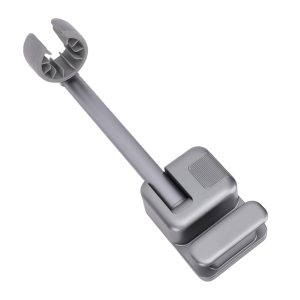
Ships from our US warehouse · 242 g · free US shipping over $49.
How to keep a small space working
Small spaces drift faster than large ones, because there is no slack to absorb anything new. The rule that keeps them stable is one in, one out, applied at the door: if something new comes into the room, something leaves it in the same week. That single habit does more than any storage purchase.
The second habit is a daily reset of one surface. In a small home, one clear surface — the counter, the desk, or the table — makes the whole room feel under control, and it is the surface you should protect above all others. Two minutes a day on that one surface is the whole maintenance routine.
When to stop buying and start removing
In a small home, storage has a hard ceiling, and it arrives sooner than people expect. Past it, every new container makes the room feel smaller even though it holds more. The signal is when you have to move one thing to reach another. At that point the only work that helps is subtraction.
Go room by room once a year and ask the two-move question of everything: would you move this to a new home? Anything you would not move is something you are storing rather than using, and in a small space that is an expensive habit. Removing a third of the contents of one room usually does more than any purchase you could make for it.
Related reading: How to choose a shoe rack for a narrow hallway. It also pairs well with How to store handbags so they keep their shape.
Frequently asked questions
- What makes small-space storage worth buying? It fits a measured gap, does two jobs or takes no floor, and one person can move it. Two out of three is usually not enough.
- Should I buy modular or fixed? Modular, unless the gap is exact. A small room changes more often than a large one, and modular storage changes with it.
- How do I shop for a small space? From a list of measured gaps, not from a picture. Five numbers on your phone will do more than an hour of browsing.
- What if nothing fits my gap? That gap is usually for something stackable, foldable or custom. Do not force a standard unit into it — it will end up on the floor.
- How do I find usable space in a small room? Measure the gaps, not the room. Beside appliances, under furniture and above doors are the usual three.