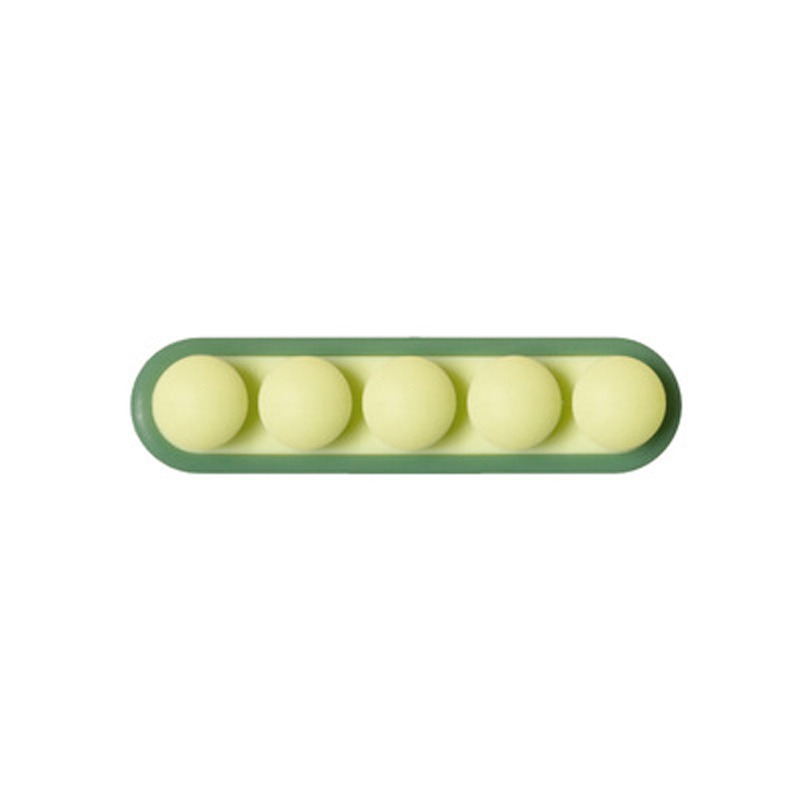
 1PCS Industrial Chic Black Metal Wall Hook - Saving Wall Mount Organizer
A desk does not get messy because it is small. It gets messy because the things on it have nowhere to go back to. Getting the router right is usually the first thing that helps, and it takes less time than finding the right cable does.
- Never put a router in a closed metal cabinet.
- Give each person a container, not a shared surface.
- Separate by job, not by length, or the drawer becomes a knot.
- Halve any advertised weight rating — real walls are not ideal surfaces.
Why the network corner is the hardest to tidy
The router and modem sit where the line comes in, which is rarely where you would choose to have a box of blinking lights. They also need airflow and a clear signal path, so the obvious tidy-up — putting them in a closed cabinet — is the one thing you should not do. Metal and dense wood will cut a Wi-Fi signal noticeably; a closed metal cabinet can halve it.
The workable compromise is a ventilated enclosure, an open shelf, or a fabric-fronted box, with the device upright and at least a few centimetres of clearance on every side. Keep the cables bundled behind rather than in front, and label the two or three you actually unplug, because that is the whole of the day-to-day interaction.
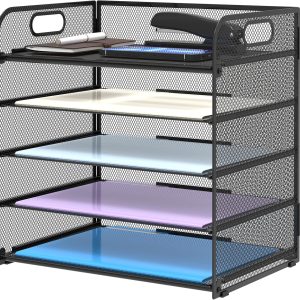
Ships from our US warehouse · 500 g · free US shipping over $49.
Label the ends, not the middle
The cable you cannot identify is the one you unplug. Label both ends of every cable within an inch of the plug, using a flag of masking tape folded around the cable — a flat wrap is unreadable once it is behind a desk, a flag reads at a glance. Write the device, not the cable type: *monitor*, not *HDMI*, because there may be three HDMI cables.
Then bundle. Group cables by the route they travel, not by the device they serve, and hold each bundle with a reusable strap. A bundle that runs together stays together when you pull one out, which is what stops the whole back of the desk coming with it. Leave a service loop of about 15 cm at each device so a cable can be unplugged without disturbing its neighbours.
Measure the desk and the reach, not the room
A desk’s usable size is not its width — it is the width minus whatever the screen and the cable tray take. A 120 cm desk with a 60 cm monitor and a 20 cm tray has about 40 cm of clear working surface, which is where the keyboard and the notebook have to fit. Measure the clear surface, and plan from that number.
Reach matters as much as size. Anything you use more than once an hour should be reachable without standing; anything above the desk should be reachable without a stool if it is used weekly. A shelf 40 cm above a desk is convenient; the same shelf 60 cm above it is decorative.
What to look for in a network enclosure
Ventilation is the specification that matters, and it is the one most enclosures get wrong. Look for slots or a mesh front, not a solid lid, and avoid metal entirely if the router is inside — a metal enclosure acts as a shield. Wood, fabric and perforated board are all fine; a sealed metal box is not.
Size it for the cables as well as the devices. A router plus a modem plus a power brick plus the incoming line needs roughly 30 x 20 x 15 cm of internal space, and the cables need to leave through a gap rather than being pinched at the back. A pinch point on a power lead is a fire risk, not just an untidy one.
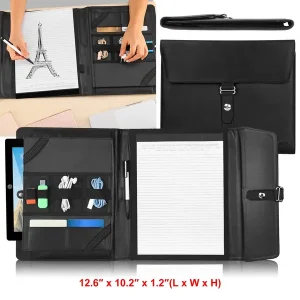
Ships from our US warehouse · 626 g · free US shipping over $49.
How to keep it working after the first week
The system fails when something new arrives and has no place to go. Give every new device a default: a spare-charger box, a spare-cable pouch, a tray for paperwork. When there is a named home for the new thing, it goes there; when there is not, it goes on the desk and the desk starts to drift again.
The other habit worth building is the five-minute reset at the end of the day. Not a tidy-up — a reset. Put the day’s objects back in their zones, clear the surface, and leave the cables where they belong. Five minutes daily is less work than an hour monthly, and it is the only maintenance this kind of setup needs.
When to stop buying and start removing
Every desk drawer eventually holds cables for devices you no longer own. Before you buy another organizer, empty the drawer and test every cable: does a device in this house use it, and do you know which one? Anything that fails both questions goes. Most people recover a third of a cable drawer this way.
The same applies to paper. A document box that is full is usually full of things that were kept because keeping was easier than deciding. Go through it once a year, remove what has expired, and the box will stay a comfortable size rather than growing into a second box you did not plan for.
For a related problem, see How to organise a desk with no wall nearby. It also pairs well with How to make a rented closet work without drilling.
Frequently asked questions
- Can I put a router in a cabinet? Only if the cabinet is ventilated and not metal. A closed metal cupboard will cut Wi-Fi range significantly.
- How much clearance does a router need? A few centimetres on every side, and never stacked under anything that gets warm.
- What should I write on a cable label? The device it serves, and if there are two, which port. *Laptop — left USB-C* is more useful than *USB-C*.
- How do I stop cables falling behind the desk? A cable tray under the desk, or a clip on the back edge. Gravity is the whole problem — give the cable somewhere to rest.
- How wide should a desk be? At least 120 cm for a monitor and a keyboard, 140 cm if you also want paper beside you. Measure the clear surface after the screen, not before.