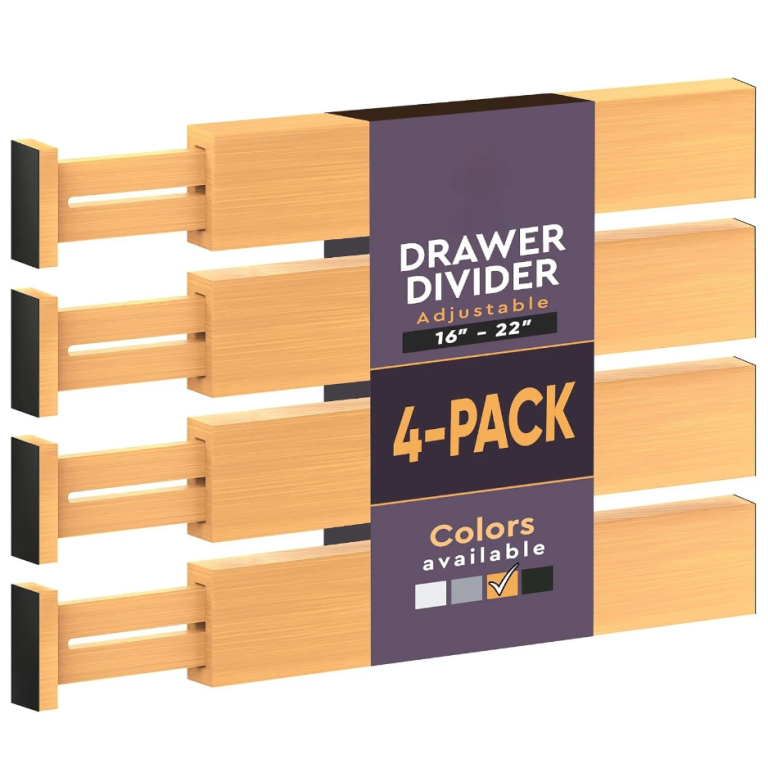
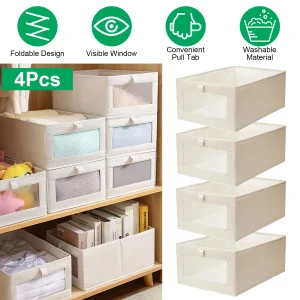
 4Pcs Foldable Closet Storage Bins with Clear Window, Washable Linen Fabric Storage Baskets for Clothes Organization

Small rooms do not fail for lack of storage. They fail because the storage is in the wrong place, doing one job when it could do two. Getting the bathroom right is a good place to start, because it is usually solved by moving something rather than by buying something.
- Plan the bathroom outward from the mirror.
- Three jobs by the door: keys, post, daily shoes.
- Measure the gaps, not the room.
- Two baskets, not one — dirty, and clean-but-unput-away.
Why bathrooms are the hardest small room
A bathroom has to hold a lot of small things in a small, wet, steamy space. That combination rules out most of what works elsewhere: cardboard goes soft, mild steel rusts, adhesive fails on a damp surface, and anything on the floor gets wet. What survives is plastic, coated metal, glass and ceramic — and anything that drains.
The second constraint is that a bathroom has almost no usable wall at hand height. The wall above the basin is usually the only place within reach, and it is often occupied by a mirror. Plan around the mirror first, and treat everything else as overflow that lives behind a door or on the back of it.
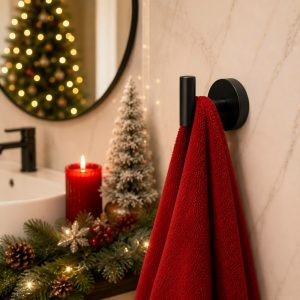
Ships from our US warehouse · 120 g · free US shipping over $49.
Plan the bathroom around the mirror
In a small bathroom the mirror is the anchor, because it is the only thing that has to be at a fixed height. Plan outward from it: daily toiletries within reach of the basin, towels within reach of the shower, and everything else behind a door or in a cabinet. Fighting the mirror for wall space is why so many bathrooms end up with a shelf in the wrong place.
Then decide what can leave the room. Spare toiletries, cleaning supplies and anything used monthly do not need to live beside the basin — they need to live somewhere dry and out of sight. Moving one category out of a small bathroom is usually worth more than any shelf you could add to it.
What a wet wall will actually hold
A bathroom wall will hold more than people think, but only if the fixing suits the surface. On tile or glass, an adhesive strip works well and is removable; on painted plasterboard in a steamy room it will fail, and it will take the paint with it. Match the fixing to the wall, and halve the advertised load to be safe.
Depth matters more than width in a bathroom. A shelf deeper than about 12 cm becomes a place things fall from and a thing you knock with your elbow. Shallow shelves, 8 to 12 cm, hold toiletries well and stay out of the way — which is why the useful bathroom shelf is usually narrower than the one people buy.
What to look for in a shelf
A shelf sags when its span is too long for its thickness. As a rough guide, a 20 mm shelf is comfortable to about 80 cm between supports, and a 25 mm shelf to about 100 cm. Beyond that you need a third bracket, a thicker board, or a shorter shelf — and the sag, once it starts, does not come back.
Brackets matter as much as the board. A bracket should reach at least two-thirds of the shelf’s depth, and it should be fixed into a stud or a proper plug, not just plasterboard. For anything above head height, use two fixings per bracket: a shelf that comes down on someone is a real risk, not just a nuisance.
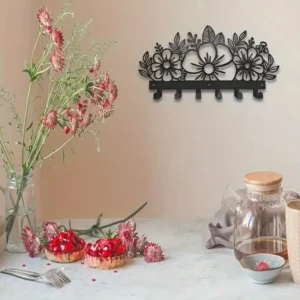
Ships from our US warehouse · 113 g · free US shipping over $49.
How to keep a small space working
Small spaces drift faster than large ones, because there is no slack to absorb anything new. The rule that keeps them stable is one in, one out, applied at the door: if something new comes into the room, something leaves it in the same week. That single habit does more than any storage purchase.
The second habit is a daily reset of one surface. In a small home, one clear surface — the counter, the desk, or the table — makes the whole room feel under control, and it is the surface you should protect above all others. Two minutes a day on that one surface is the whole maintenance routine.
When to stop buying and start removing
In a small home, storage has a hard ceiling, and it arrives sooner than people expect. Past it, every new container makes the room feel smaller even though it holds more. The signal is when you have to move one thing to reach another. At that point the only work that helps is subtraction.
Go room by room once a year and ask the two-move question of everything: would you move this to a new home? Anything you would not move is something you are storing rather than using, and in a small space that is an expensive habit. Removing a third of the contents of one room usually does more than any purchase you could make for it.
See also How to organise a bathroom with no cabinet, and How to choose a bathroom caddy for the wider picture.
Frequently asked questions
- What storage survives a steamy bathroom? Plastic, coated metal, glass and ceramic. Avoid untreated steel and anything made of board.
- Where should toiletries go? Within reach of the basin for daily items, and in a closed cupboard for everything else. Steam ruins open shelving over time.
- Where should a bathroom shelf go? Beside or under the mirror, at about 110 to 120 cm. Anywhere else and it either blocks the mirror or is out of reach.
- How do I store towels in a small bathroom? On a rail behind the door for daily towels, and in a cupboard elsewhere for the rest. Towels take more space than people plan for.
- How much weight can a bathroom shelf hold? A wall-fixed shelf, 5 to 10 kg with proper fixings. An adhesive one, half that on tile and a quarter on painted plasterboard.