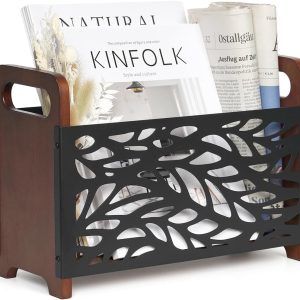
 Wood Magazine Holder, Rustic Magazine Rack And File Organizer For Home, Office, Living Room And Bedroom
 Wall-Mounted Metal Rack Multifunctional Key Holder, Practical Decor Highlight
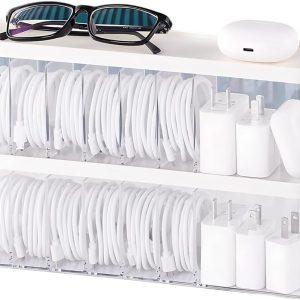 Charger Cable Cord Storage Organizer Box, Easy Cable Management Case For USB Wires, Charging Cords And Home Office Use
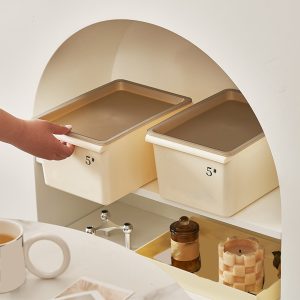 Storage Bin Plastic Box With Lid Stackable Cream Style Ample Capacity Grooved Bottom Storage Basket For Closet Bedroom 5L
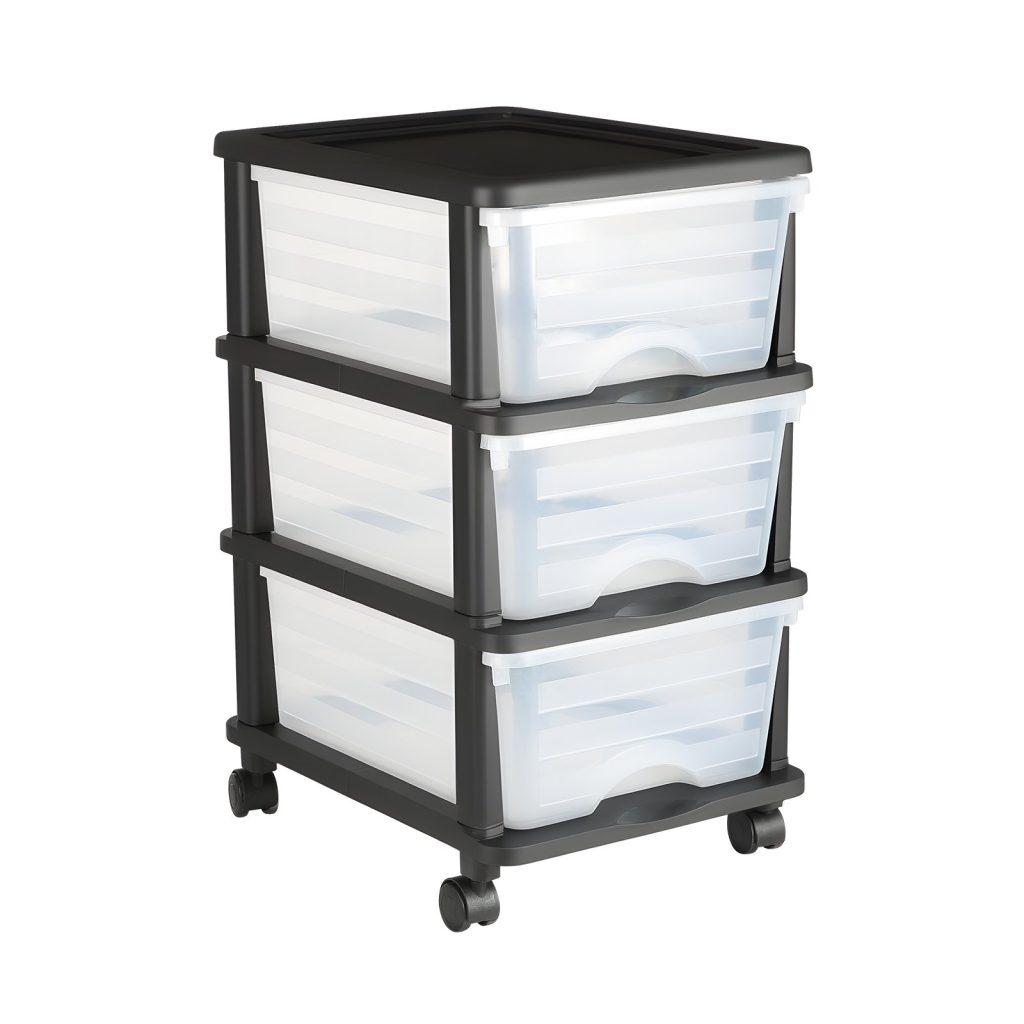
In a small home the scarce thing is not space — it is clear surface. Getting the home right is one of the first things worth doing, and it costs nothing to try.
- Leave a 2 cm gap behind storage on an outside wall.
- Divide by activity, not by furniture.
- Divide the wall into three bands: reach, stretch, archive.
- Two baskets, not one — dirty, and clean-but-unput-away.
Why a small room feels smaller than it is
A small room reads as smaller than it is when every surface is doing a job. Storage, seating and work all competing for the same two metres of wall is what makes a space feel tight — not the number of square metres, but the number of things asking for attention at once.
That is why clearing one surface changes a room so much. The eye needs somewhere to rest, and a single empty stretch of wall or counter gives it one. Before you move anything or buy anything, clear the surface you see first and live with it for a week.
Ships from our US warehouse · 500 g · free US shipping over $49.
Divide the room by activity, not by furniture
A small room reads as spacious when it is divided by activity rather than by furniture. Sleeping in one corner, working in another, eating in a third — even if the divisions are only a rug, a lamp and the direction a chair faces. The eye reads separate zones as separate rooms, and separate rooms feel bigger than one crowded one.
Storage should follow the same logic: everything a zone needs lives in that zone. If the desk zone and the sleep zone share one shelf, both feel unsettled. A shelf of work things above the desk and a shelf of bedside things beside the bed is worth more than one bigger shelf, even when the total volume is identical.
What a wet wall will actually hold
A bathroom wall will hold more than people think, but only if the fixing suits the surface. On tile or glass, an adhesive strip works well and is removable; on painted plasterboard in a steamy room it will fail, and it will take the paint with it. Match the fixing to the wall, and halve the advertised load to be safe.
Depth matters more than width in a bathroom. A shelf deeper than about 12 cm becomes a place things fall from and a thing you knock with your elbow. Shallow shelves, 8 to 12 cm, hold toiletries well and stay out of the way — which is why the useful bathroom shelf is usually narrower than the one people buy.
What to look for in a shelf
A shelf sags when its span is too long for its thickness. As a rough guide, a 20 mm shelf is comfortable to about 80 cm between supports, and a 25 mm shelf to about 100 cm. Beyond that you need a third bracket, a thicker board, or a shorter shelf — and the sag, once it starts, does not come back.
Brackets matter as much as the board. A bracket should reach at least two-thirds of the shelf’s depth, and it should be fixed into a stud or a proper plug, not just plasterboard. For anything above head height, use two fixings per bracket: a shelf that comes down on someone is a real risk, not just a nuisance.

Ships from our US warehouse · 150 g · free US shipping over $49.
How to keep a small space working
Small spaces drift faster than large ones, because there is no slack to absorb anything new. The rule that keeps them stable is one in, one out, applied at the door: if something new comes into the room, something leaves it in the same week. That single habit does more than any storage purchase.
The second habit is a daily reset of one surface. In a small home, one clear surface — the counter, the desk, or the table — makes the whole room feel under control, and it is the surface you should protect above all others. Two minutes a day on that one surface is the whole maintenance routine.
When to stop buying and start removing
In a small home, storage has a hard ceiling, and it arrives sooner than people expect. Past it, every new container makes the room feel smaller even though it holds more. The signal is when you have to move one thing to reach another. At that point the only work that helps is subtraction.
Go room by room once a year and ask the two-move question of everything: would you move this to a new home? Anything you would not move is something you are storing rather than using, and in a small space that is an expensive habit. Removing a third of the contents of one room usually does more than any purchase you could make for it.
Related reading: How to store cleaning supplies in a small home. It also pairs well with How to choose a wall hook for a rented home.
Frequently asked questions
- Why does my room feel cramped? Usually because every surface is busy. One clear surface does more for how a room feels than any storage you could add.
- What should I clear first? The surface you see when you walk in. That is the one the eye reads as the state of the whole room.
- How do I make one room feel like two? Divide by activity, not by walls. A rug, a lamp and the direction of the furniture are enough for the eye to read two zones.
- Should storage be shared between zones? No. Each zone should hold its own things. Shared shelves make both zones feel temporary.
- How much weight can a bathroom shelf hold? A wall-fixed shelf, 5 to 10 kg with proper fixings. An adhesive one, half that on tile and a quarter on painted plasterboard.