Every home has doors, and almost none of them are used for storage. An over-the-door organizer adds dozens of pockets in a place that costs no floor space and requires no tools. It is the single cheapest capacity upgrade available, and it works in closets, bedrooms, bathrooms and kitchens alike. The trick is choosing the right one and hanging it properly.
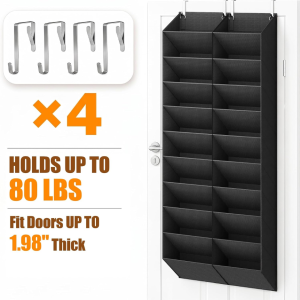
- Check the door thickness before you buy — hangers vary.
- Pockets are for small, light, frequent items.
- Hang on the inside if the door closes, the room side if it does not.
- Never overload the top pockets; weight gathers at the bottom.
Check the door before you buy
Over-the-door hangers are rated for a door thickness, usually around 3.5 to 4.5 cm. A standard interior door is fine; a fire door, a glazed door or a thick exterior door often is not, and the hanger will either not fit or will prevent the door closing. Measure the top edge of the door across its thickness. If it is borderline, a padded hanger or an adjustable hook set is the safer choice.
Ships from our US warehouse · 300 g · free US shipping over $49.
What belongs in the pockets
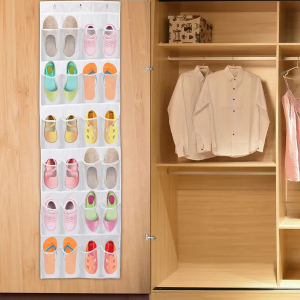
Door storage is for small, light things you use often: shoes, accessories, cleaning cloths, small toys, bathroom bottles, craft supplies. The twenty-pocket shoe organizer is the classic because shoes fit perfectly and a pair per pocket is easy to maintain. What does not belong is anything heavy or bulky — a pocket organizer is fabric, and a pair of boots in a top pocket will stretch it permanently. Keep the heavy items low and the light ones high.
Which side of the door to use
If the door closes into the room, hang the organizer on the inside so it is hidden. If the door stays open against a wall, the room side is easier to reach and still tidy. In a closet, the inside of the closet door is ideal because the pockets are out of sight until you need them. In a bathroom, the room side of a door is common because the pocket contents are used daily.
Hang it so it stays put
A door organizer shifts if it is not anchored. Most hang from two hooks over the top of the door, and that is enough if the load is balanced. If yours drifts or swings, add a small adhesive pad at the bottom edge to hold it against the door face — it stops the sway without drilling. Load the bottom pockets first and build upward, so the weight sits where the hanger is strongest.
Ships from our US warehouse · 195 g · free US shipping over $49.
Clear pockets or fabric?
Clear plastic pockets let you see what is inside at a glance, which matters for shoes and small accessories. Fabric pockets look softer and are quieter in a bedroom, but you lose the instant visibility. A common compromise is clear for the closet and fabric for a bedroom or hallway, where the organizer is on show. Both work; the choice is about whether you want to see the contents or hide them.
When a door is the wrong answer
Door storage fails when the door is used constantly and the pockets are in the way, or when the items are too heavy for fabric. In a busy hallway, a wall-mounted hook rail may serve better than a pocket organizer. The door is a great home for the things you use daily and lightly; it is a poor home for anything you need two hands to lift.
Door storage pairs well with closet bins that add levels, and for renters who cannot drill, no-drill storage covers the alternatives.
Frequently asked questions
- Will an over-the-door organizer fit my door? Measure the door thickness at the top edge. Most fit doors around 3.5 to 4.5 cm; thick or fire doors usually need an adjustable hook set.
- How much weight can it hold? Fabric organizers handle light items well — shoes, accessories and small bottles. Keep heavy things in the lower pockets or off the organizer entirely.
- Does it stop the door closing? Not if the hanger is the right thickness. A too-thick hanger is the usual cause of a door that will not shut.
- Can I use one on a bathroom door? Yes — the room side is common for daily bathroom items, and clear pockets help in a humid room.
- How do I stop it swinging? Balance the load and add a small adhesive pad at the bottom edge to hold it against the door.